
What's Happening?
The Taliban government in Afghanistan has expressed a commitment to preserving the country's cultural artifacts and historical sites, marking a significant departure from their previous rule between 1996
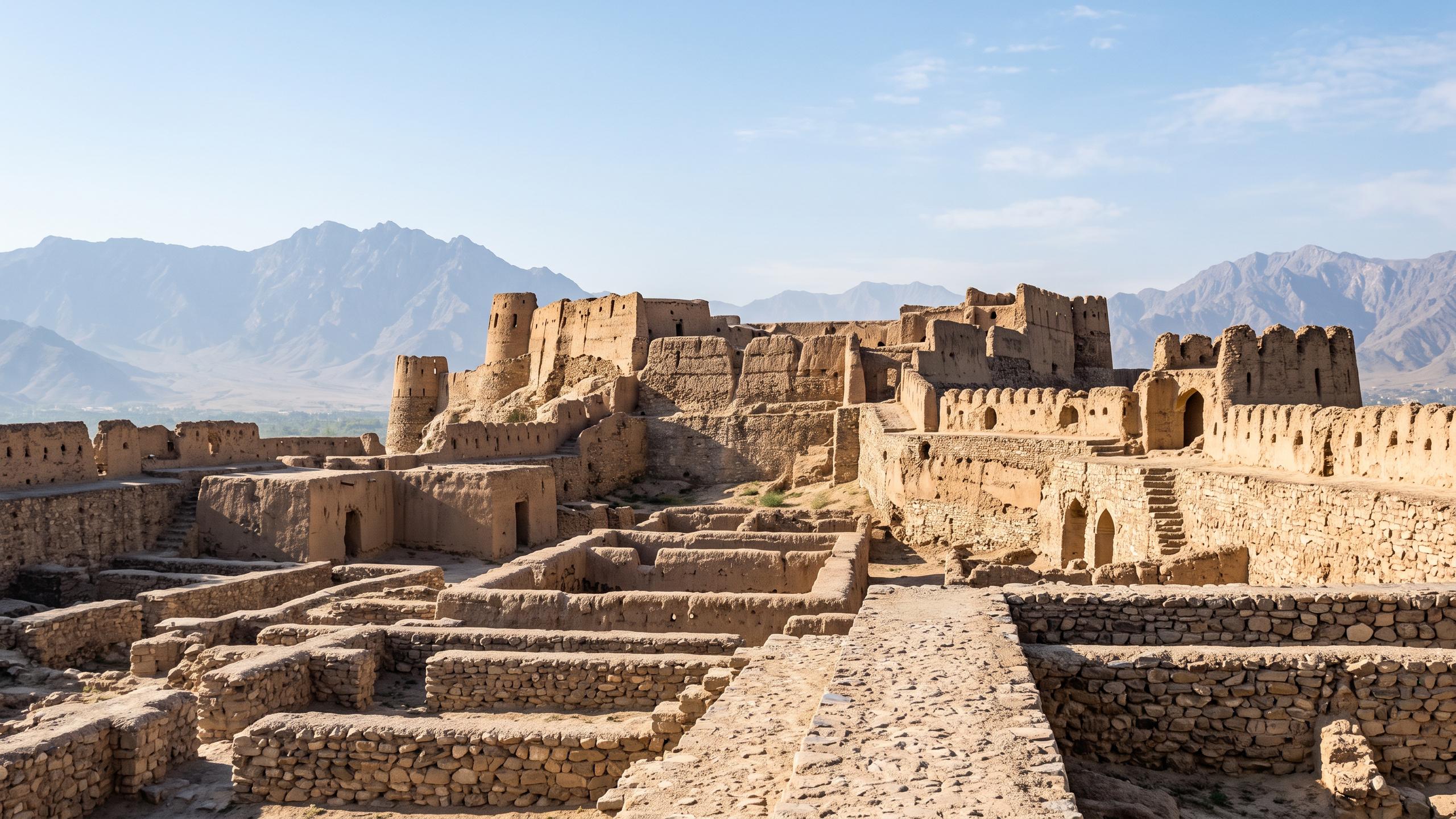
and 2001. This commitment is evident in the ongoing extensive conservation project at the ancient Bala Hissar fortress in Kabul, led by the Aga Khan Trust for Culture (AKTC). The project aims to transform the site into a public archaeological park, complete with landscaped gardens, restaurants, and a museum. Excavations at Bala Hissar have unearthed a wealth of archaeological treasures, including evidence of ancient human habitation, remains of a Buddhist monastery, and luxurious baths of a Mughal palace, revealing over two millennia of Afghanistan's tumultuous history. Ministry of Information and Culture spokesperson Khubaib Ghufran stated that the government recognizes the importance of these sites as valuable sources of insight and lessons, prioritizing their restoration.
Why It's Important?
This shift in the Taliban's stance on cultural heritage is highly significant, as it contrasts sharply with their past actions, such as the destruction of the Bamiyan Buddha statues in 2001 and the ransacking of the National Museum. This new approach could potentially open avenues for international engagement and support in preserving Afghanistan's rich historical legacy, which has suffered greatly from decades of conflict and neglect. For the Afghan people, the preservation and development of sites like Bala Hissar into public parks and museums offer opportunities for cultural pride, education, and potentially, future tourism, contributing to national identity and economic recovery. The project also demonstrates a pragmatic approach by the Taliban, possibly aimed at gaining some international legitimacy and showcasing a more moderate image, even as their broader governance policies remain controversial.
What's Next?
The AKTC's conservation project at Bala Hissar is a long-term commitment, expected to span decades, involving not only conservation but also extensive archaeological work. The Taliban government's continued support will be crucial for the project's success and for attracting further international collaboration. Future steps will likely involve continued excavation, restoration, and the development of infrastructure for the archaeological park. The success of this project could serve as a model for other historical sites in Afghanistan, potentially leading to more widespread efforts in cultural preservation. However, the sustainability of this commitment will depend on the Taliban's consistent adherence to their stated policy and their willingness to work with international organizations, despite ongoing political challenges and sanctions. The project also includes a training program for Afghan archaeology students, which will be vital for building local capacity in heritage management.
Beyond the Headlines
The Taliban's apparent change of heart regarding cultural heritage raises deeper questions about their evolving ideology and governance strategy. While it could be a genuine recognition of the value of historical sites, it might also be a calculated move to improve their international image and secure much-needed foreign aid or investment. The preservation of pre-Islamic artifacts, in particular, challenges the hardline interpretations of Islamic law that characterized their previous rule. This development could signal internal debates within the Taliban leadership regarding their approach to governance and their relationship with the global community. It also highlights the enduring power of cultural heritage to transcend political divides and serve as a point of common ground, even in highly contested environments. The project at Bala Hissar, therefore, is not just about bricks and mortar, but also about the potential for cultural diplomacy and a subtle redefinition of the Taliban's identity on the world stage.