



What's Happening?
An investigation by The Sentry has revealed significant state capture and chronic regulatory neglect within the commercial forestry sector of the Central African Republic (CAR). Politically connected foreign
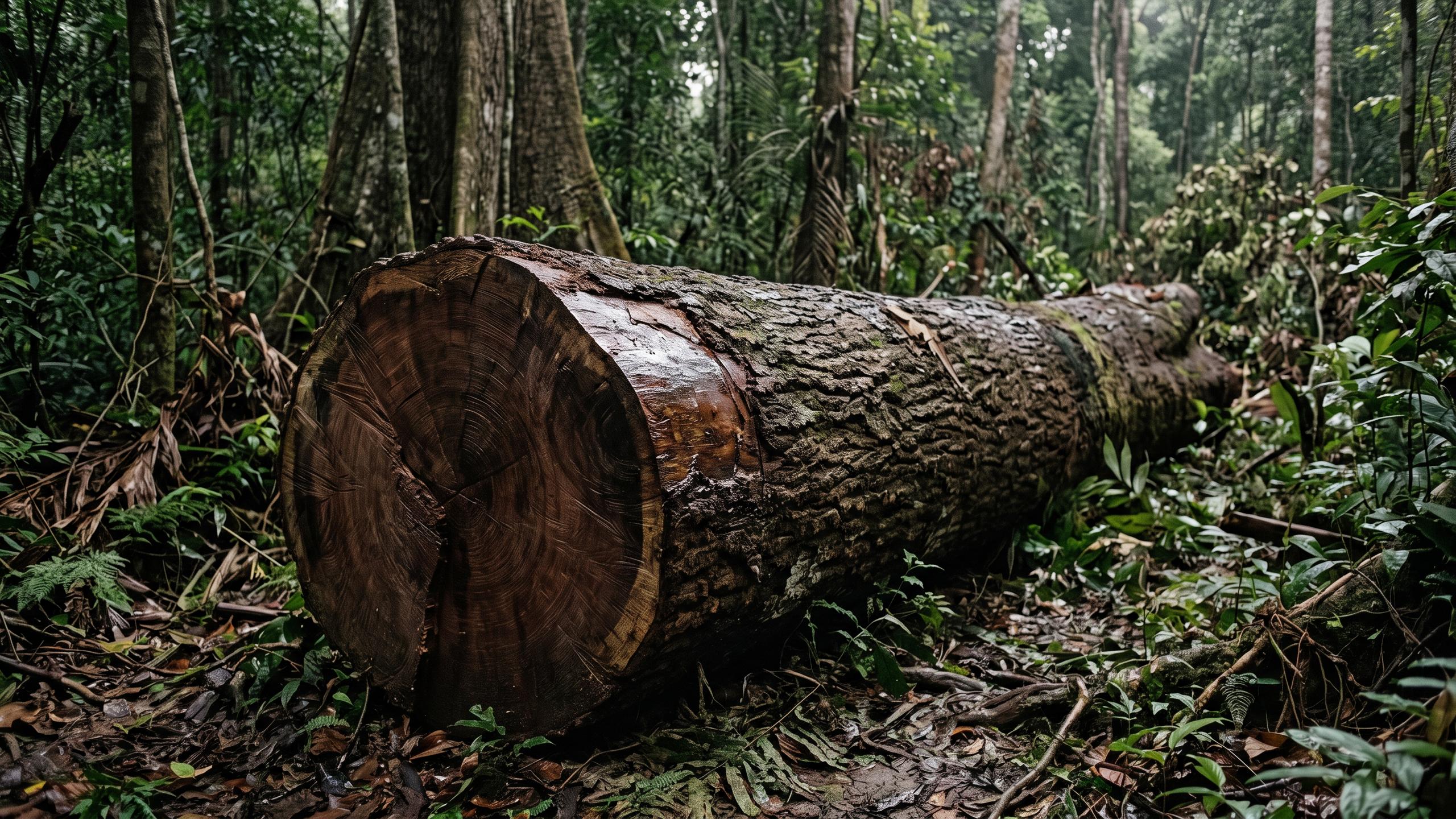
companies are acquiring valuable public assets, while legal safeguards are not being enforced. These companies frequently fail to deliver on promises of infrastructure development, such as processing facilities, clinics, and schools, made in exchange for logging commercially valuable trees. Revenues that should benefit the state and local communities are instead leaving the country, leading to resource depletion and minimal domestic capacity building. The report highlights the involvement of Russia's Wagner Group and Chinese firms, which dominate industrial logging in the Congo Basin. The Sentry's investigation focused on six of CAR's 14 commercial forest concessions, uncovering violations including misrepresentation of ownership, failure to pay millions in forestry taxes, unlawful logging, and non-compliance with laws requiring timber processing units and limiting raw log exports.
Why It's Important?
This report is important because it exposes how corruption and weak governance in the CAR's forestry sector have broader implications for international trade, environmental conservation, and human rights. For the U.S., it raises concerns about the potential for illegally sourced timber to enter international supply chains, impacting the integrity of global markets and potentially undermining U.S. efforts to promote ethical sourcing and combat illicit financial flows. The involvement of entities like the Wagner Group, which the U.S. has sanctioned, highlights the nexus between resource exploitation and geopolitical influence, posing national security concerns. Furthermore, the failure to enforce CITES requirements for internationally protected timber species means that U.S. and other importing countries may inadvertently be contributing to the endangerment of these species. This situation underscores the need for enhanced due diligence on timber imports from high-risk regions and robust enforcement of international environmental and trade regulations.
What's Next?
The Sentry's report recommends several actions to address the issues in CAR's forestry sector. It calls for the full enforcement and updating of the CAR Forestry Code, including provisions for private rights of action and thorough vetting of concession owners. The European Union is urged to reclassify CAR's deforestation risk from low to standard, given the irregularities and presence of sanctioned actors. All jurisdictions, including the U.S., should exercise enhanced due diligence on wood from CAR, investigate suspicious timber shipments, and identify individuals and entities connected to sanctioned persons within the timber industry. These recommendations aim to improve transparency, accountability, and the sustainable management of CAR's forest resources. The U.S. has already sanctioned Bois Rouge, a company linked to the Wagner Group, indicating a willingness to act on these findings. Further international pressure and coordinated efforts will be crucial to ensure compliance and prevent the flow of illicit timber into global markets.
Beyond the Headlines
The exploitation of CAR's forestry resources by politically connected foreign companies, as detailed by The Sentry, reveals a complex web of state capture, environmental degradation, and human rights abuses. Beyond the immediate economic losses and ecological damage, this situation perpetuates a cycle of poverty and instability in the region, as promised community benefits are unfulfilled. The lack of domestic processing capacity means CAR loses out on value-added industries and job creation, reinforcing its role as a raw material exporter. This scenario also highlights the broader challenge of enforcing international environmental agreements like CITES in countries with weak governance. The report implicitly calls for a re-evaluation of global supply chain ethics, urging consumers and businesses in developed nations to consider the origins of their timber products and demand greater transparency. The long-term implications include accelerated climate change due to deforestation in the Congo Basin, a critical carbon sink, and the erosion of trust in international regulatory frameworks.