



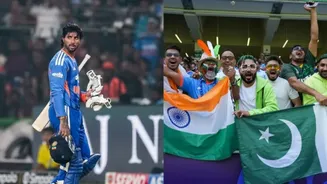


Political Stance Confirmed
Prime Minister Shahbaz Sharif has unequivocally announced that Pakistan's cricket team will not participate in the upcoming T20 World Cup 2026 group-stage
encounter against India. The tournament, scheduled to commence on February 7 and co-hosted by India and Sri Lanka, will see Pakistan absent from this highly anticipated fixture. During a federal cabinet address in Islamabad, the Prime Minister articulated Pakistan's clear position: that politics should not intertwine with sporting events. He emphasized that this is a considered decision, and Pakistan will stand in solidarity with Bangladesh, deeming the stance appropriate. This directive from the Prime Minister's office instructs the Pakistan Cricket Board (PCB) to adhere to this policy, potentially leading to significant implications for the team's participation and future cricketing engagements.
Solidarity and Security Concerns
The decision to boycott the match against India appears to be a move rooted in solidarity and potentially linked to security concerns, although the latter is more directly attributed to Bangladesh's request. Pakistan's stance, as articulated by Prime Minister Sharif, emphasizes a principle of separating sports from political considerations. This statement follows reports that Bangladesh had requested the International Cricket Council (ICC) to shift their tournament matches away from India to Sri Lanka, citing security apprehensions. While the article mentions this as a precursor, Pakistan's direct boycott is framed by the PM as a principled stand. The article also notes that Pakistan's stance on potentially facing India in the final remains unaddressed, leaving a degree of uncertainty about their full commitment to the tournament if such a scenario arises.
ICC's Disapproval and Sanctions
The International Cricket Council (ICC) has expressed its apprehension regarding Pakistan's selective participation strategy in the T20 World Cup. The global cricket body views such decisions as contrary to the fundamental principles of fair play, integrity, and competitive balance within the sport. Following Pakistan's confirmed boycott of the match against India, it is highly probable that the country will face repercussions from the ICC. Media reports suggest that Pakistan could be subjected to stringent sanctions. These might include disciplinary actions, limitations on issuing No-Objection Certificates (NOCs) for Pakistani players participating in overseas leagues like the Pakistan Super League (PSL), substantial financial losses due to reduced revenue, and even the potential forfeiture of hosting rights for future ICC tournaments. The Pakistan Cricket Board (PCB) chairman, Mohsin Naqvi, has acknowledged the ICC's stance and confirmed that the board will abide by the government's directive.
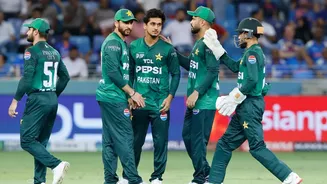
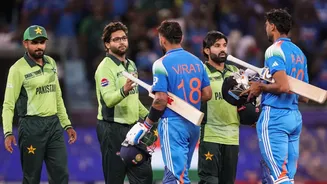


![[WATCH] Gautam Gambhir ignores question on Pakistan's T20 World Cup boycott against India](https://g-mob.glance-cdn.com/public/fc/image/mfxFqQixrDW0.webp)