






Ancient Roots of Flatbread
The concept of placing toppings on baked dough is an age-old practice, predating modern pizza by millennia. Civilizations like the ancient Greeks, with
their 'plakous' drizzled with olive oil and herbs, and the Romans, who added fish sauce and honey to their breads, laid the groundwork for this culinary tradition. While these early creations weren't pizza as we know it, they clearly demonstrate a long-standing human tendency to enhance simple bread with flavourful additions. This fundamental idea of using bread as a base for other ingredients is the unifying thread that connects these ancient practices to contemporary dishes across the globe, showing that the essence of pizza is a far more universal concept than often realised.
Italian Variations on a Theme
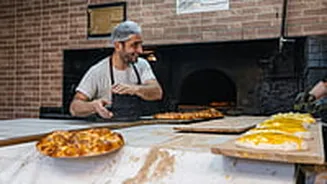
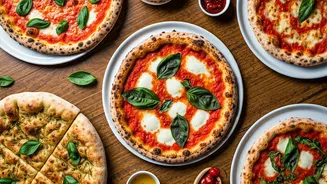
Within Italy itself, 'pizza' encompasses a variety of flatbread traditions, with the Neapolitan style gaining worldwide fame relatively recently. The iconic pizza we recognise today emerged in Naples between the 18th and 19th centuries, coinciding with the wider availability of tomatoes. Bakers in Naples began spreading crushed tomatoes on dough, baking it in wood-fired ovens, and enhancing it with toppings like cheese, anchovies, or herbs. Beyond this celebrated version, Italy boasts other delicious cousins. Pinsa, a Roman specialty, features a dough blend of wheat, rice, and soy flours for a lighter texture, often served oval-shaped and topped after baking. Further north, focaccia, a thicker, olive oil-brushed bread, is enjoyed plain, with onions, or adorned with tomatoes and olives, all adhering to the core principle of bread as a flavour canvas.
Mediterranean & Middle Eastern Flavors
France contributes its own delectable take with pissaladière from Nice, a dish that appears as a cheese-less pizza. Its distinctive topping comprises slow-cooked onions, anchovies, and olives spread generously over a bread base, drawing its name from 'pissalat', a regional anchovy paste. Moving across the Mediterranean to the Levant, manakish (or manakiche) is a staple, with bakeries across Lebanon and Syria preparing these dough rounds daily. The most iconic topping is za'atar, a fragrant mixture of thyme, sesame, and sumac blended with olive oil, though variations with cheese, minced meat, and vegetables are also popular. Türkiye offers lahmacun, a thin, crisp round topped with a spicy mixture of minced lamb and tomato, rapidly baked in a hot oven. Often referred to as 'Turkish pizza', it's typically rolled with fresh herbs and a squeeze of lemon before consumption, maintaining its unique culinary identity.
Eastern Culinary Cousins
The journey of topped flatbreads continues eastward, with remarkable regional interpretations. In Georgia, khachapuri is a beloved dish that uniquely combines bread with cheese and egg, with the Adjarian version presenting itself as a boat-shaped vessel filled with molten cheese and a rich egg yolk stirred in just before serving. India offers a diverse range of related dishes, including kulcha, prepared by street vendors and topped with herbs, onions, or paneer before being baked in a tandoor oven. Even paratha, a staple Indian flatbread, sometimes incorporates fillings or toppings that blur the lines between a stuffed bread and a complete meal. Further east in China, the 'bing' category includes various breads, often layered with scallions or sesame paste. While typically folded rather than topped, they embody the same fundamental instinct to marry dough with flavour in a convenient, handheld format.
Japan's Savory Pancake
Japan presents what might be considered one of the most surprising relatives in the global family of topped flatbreads: okonomiyaki. Although it bears a closer resemblance to a savory pancake than a traditional bread, the underlying culinary principle remains remarkably similar. Okonomiyaki involves a batter, typically mixed with shredded cabbage, cooked on a griddle and then generously finished with various sauces, mayonnaise, and bonito flakes. Regional variations abound, with the Osaka style often incorporating layers of pork or seafood, while the Hiroshima version uniquely stacks noodles beneath the pancake. This dish, despite its different form, perfectly illustrates the universal appeal of using a cooked dough or batter as a base for a diverse array of flavorful ingredients, showcasing a creative adaptation of the ancient topped bread concept.
Why the Global Trend?
The widespread proliferation of pizza-like dishes across diverse cultures can be attributed to several practical and social factors. Primarily, bread dough is an excellent vehicle for cooking, as it bakes quickly on hot surfaces, making it ideal for ingredients that require minimal heat exposure. Furthermore, toppings served on bread helped to stretch scarcer resources; a small amount of cheese, meat, or herbs could impart significant flavour to an entire meal when distributed across a flatbread. Trade routes also played a crucial role, facilitating the movement of ingredients that influenced local flatbread adaptations; for instance, tomatoes from the Americas revolutionized Italian pizza, while chilies impacted Asian toppings and cheese-making traditions shaped dishes from the Mediterranean to the Caucasus. The social aspect of eating also contributed significantly, as flatbreads are inherently easy to share and highly customizable, allowing households to cater to individual preferences for herbs or meats while maintaining a common base.
Modern Adaptations & Legacy
Today, the influence of Italian pizza is undeniable, having travelled the globe and inspired countless local interpretations. In Brazil, pizzas might be found with unconventional toppings like green peas and boiled eggs, while South Korea has seen sweet potato mousse layered beneath cheese. Sweden offers a unique combination of curry powder, bananas, and peanuts on its pizza, and the perpetually debated Hawaiian pizza with pineapple slices continues to spark culinary discussions. These playful and often surprising combinations are not a departure from tradition but rather a continuation of the ancient spirit of adaptation that has always defined the concept of topped flatbreads. Bakers throughout history have creatively utilized the ingredients readily available in their regions, demonstrating that 'pizza' is less a single Italian dish and more a global culinary pattern. Wherever people bake bread and add flavour, they are participating in a shared human habit rooted in resourcefulness and a love for delicious combinations.