



Evolution of Romance
For generations, the honeymoon served as a sacred, private retreat for newlyweds to transition into married life. It was a designated period of solitude,
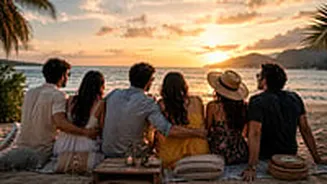
a buffer zone after the wedding's fanfare, allowing couples to deepen their connection and establish their shared future. This tradition, however, stemmed from an era where relationships often began at the altar. Today's couples, frequently having dated for extended periods and already sharing significant life experiences, find the concept of absolute privacy less compelling. The idea of 'escaping' feels redundant when much of their life is already openly shared. Consequently, a noticeable shift is occurring: the honeymoon is transforming from a private escape into an extension of their existing social lives, incorporating friends and family into the post-nuptial journey.
Intimacy Beyond Solitude
The original purpose of the honeymoon was rooted in discovery – understanding each other emotionally, psychologically, and physically, especially in arranged marriages where couples had limited prior interaction. Privacy was paramount, enabling this deep exploration. However, with modern relationships often starting with years of dating, cohabitation, and shared challenges, there's less 'new ground' to cover. The focus shifts from discovery to confirmation and shared celebration. This change lessens the pressure on the honeymoon to be the sole arena for initiating intimacy. Couples are finding that shared experiences with loved ones can amplify joy and create meaningful memories, suggesting that intimacy isn't solely dependent on isolation but can flourish within a supportive social circle.
Shared Joy, New Norms
The trend of 'buddymoons' reflects a broader societal shift towards valuing interconnectedness and openness. For many, including PR professional Priya Sharma, opting for a trip to Nainital with her family post-wedding felt like a natural progression rather than a deviation from tradition. This inclusive approach, filled with shared laughter and comfort, underscores the idea that intimacy can be enhanced, not diminished, by the presence of friends and family. The visibility of such choices, sometimes mirrored by celebrity couples like Rashmika Mandanna and Vijay Deverakonda travelling with their circle, helps normalize these practices. What was once considered unconventional is gradually becoming a celebrated norm, driven by a generation that embraces shared experiences as authentic expressions of love and connection.
A Spectrum of Intimacy
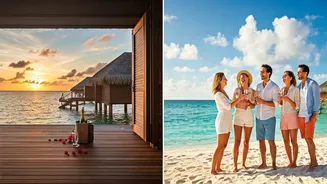
The rise of the buddymoon isn't necessarily about replacing the traditional honeymoon but rather about expanding its possibilities. Couples are adopting a more flexible and layered approach to post-wedding travel. Lifestyle influencers Astha Srivastava and Aman Saxena, for instance, experienced a private honeymoon in Malaysia but observed many other couples enjoying group trips and shared villas. This observation points to an expansion, not a reduction, of intimacy. It suggests that couples can successfully balance intensely private, romantic moments with the vibrant energy of shared celebrations. This flexibility acknowledges that intimacy exists on a spectrum, allowing couples to curate experiences that best suit their relationship and social dynamics, making the overall experience richer and more personalized.
Timeless Traditions, New Labels
The perception of 'buddymoons' as a completely novel trend overlooks the enduring nature of shared celebratory travel. Couples like Seema and Vivek Kochhar, married for 33 years, recall engaging in similar practices decades ago – making friends on their honeymoon and later traveling with family, thoroughly enjoying the experience. This perspective highlights that while the context and terminology might evolve, the desire for shared joy and companionship during significant life events is not new. What has changed is the language and societal acceptance surrounding these practices. What was once simply 'something that happened' is now being recognized and labeled as a 'buddymoon,' suggesting a legitimization of an age-old inclination towards communal celebration rather than the invention of an entirely new concept.
Organic Blending of Lives
For many modern couples, the move towards 'buddymoons' isn't a deliberate strategy but an organic evolution shaped by their deeply interconnected social lives. Swapnil and Shreya, who dated for a decade before marrying in Mumbai, initially planned a private honeymoon. However, their close friends naturally integrated into their plans, leading to a memorable group trip to Thailand. This spontaneity illustrates how contemporary relationships often blur the lines between couplehood and community. The wedding is increasingly viewed not as an exit from one's social circle but as an integration of it into a new chapter. Couples are bringing their established friendships and family ties along, signifying a shift from rigid boundaries to a more fluid and inclusive definition of partnership and celebration.