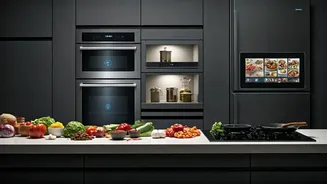

AI's Kitchen Evolution
The integration of AI into kitchen appliances marks a significant shift, creating smart kitchens. These intelligent systems learn user preferences and
cooking habits to optimize tasks. AI-powered ovens, for example, can suggest recipes based on available ingredients and automate cooking processes for consistent results. Refrigerators can monitor food inventory, track expiration dates, and generate shopping lists, minimizing waste. Smart dishwashers, equipped with advanced sensors, adjust water and energy consumption. Voice assistants like Alexa or Google Assistant streamline kitchen operations, enabling hands-free control of appliances, setting timers, and accessing recipes. This evolution is driven by the aim to deliver convenience, efficiency, and personalized culinary experiences within Indian homes, making cooking less time-consuming and more enjoyable.
Connected Appliance Revolution
Connected technologies are another crucial aspect of the smart kitchen revolution. Wi-Fi and Bluetooth enable seamless communication between appliances and the internet. Smart appliances can be controlled remotely through smartphones or tablets, allowing users to preheat ovens on their way home or monitor the status of a dish. Cloud connectivity allows for software updates, access to new features, and integration with other smart home devices. Interactive touchscreens on appliances offer intuitive interfaces for selecting cooking modes, accessing recipes, and managing kitchen operations. Integration with external services, such as grocery delivery services, enhances the overall convenience. The interconnected nature of these appliances also facilitates data collection, which enables manufacturers to develop future generations of appliances based on actual user behaviour and preference patterns in India, leading to continuous improvements.
Personalized Culinary Experiences
The shift towards smart kitchens also prioritizes personalized culinary experiences, catering to individual tastes and dietary needs. AI-powered systems can suggest recipes tailored to user preferences, dietary restrictions, and available ingredients. Smart appliances can remember past cooking habits, adjust settings, and provide customized recommendations. Features like automatic meal planning, which generates weekly menus based on dietary needs and preferences, reduce meal preparation time. Interactive recipe libraries, with step-by-step instructions and video tutorials, make cooking more accessible. Smart kitchen systems can also adapt to diverse Indian cuisines and cooking styles, providing options and guidance for traditional recipes. This focus on personalization allows Indian households to enjoy customized meal experiences that fit their lifestyle, taste preferences, and health needs, creating a more enjoyable and efficient kitchen environment.
Efficiency and Sustainability
Smart kitchens are also at the forefront of promoting efficiency and sustainability in Indian homes. Energy-efficient appliances, often equipped with smart sensors, optimize energy consumption and reduce electricity bills. Smart refrigerators with inventory management capabilities reduce food waste by tracking expiration dates and suggesting ways to use up ingredients. The remote control features of connected appliances reduce water usage and the automated cleaning features of smart dishwashers minimize water waste. Smart kitchen technologies promote more sustainable habits in the kitchen. Automated lighting and ventilation systems help in energy conservation, creating a greener and more efficient household. By integrating these systems, Indian kitchens can significantly reduce their environmental footprint while also saving money on utility bills and reducing food waste, promoting a more responsible lifestyle.
The Future Unveiled
Looking ahead to 2026, the evolution of smart kitchens in India will continue with even greater advancements. Expect to see further integration of AI, with AI-powered robots assisting with meal preparation and dishwashing. Augmented reality applications will overlay recipe instructions and cooking tips onto the kitchen environment, making cooking easier. The growth of voice control will make kitchen operations even more hands-free and convenient. Increased focus on user data will enable deeper customization and personalized services. Integration with health and wellness platforms will provide users with tailored meal plans and nutritional insights. Smart kitchens will become more responsive, intuitive, and seamlessly integrated into daily life, transforming the heart of the home into a highly efficient, sustainable, and personalized space that reflects the evolving needs and lifestyles of Indian families.