





'I Want to Hold Your Hand' (1964): The Spark That Lit the World
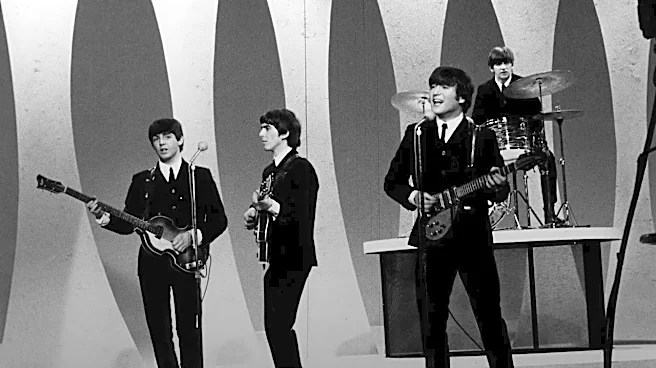
Before studio wizardry and psychedelic explorations, there was pure, uncut pop perfection. 'I Want to Hold Your Hand' is the sound of a cultural explosion. It was The Beatles' first No. 1 hit in the U.S., and their debut performance of the song on The Ed
Sullivan Show is the stuff of legend. It wasn't just a catchy tune; it was the Big Bang of the British Invasion, shifting the center of the rock and roll universe across the Atlantic. The song's tight structure, exuberant energy, and harmonic complexity, all packed into just over two minutes, set a new standard for the pop single. It was a masterclass in crafting a hit that was both commercially irresistible and musically sophisticated, inspiring a generation of future rock legends to pick up guitars.
'Eleanor Rigby' (1966): Pop Music Gets a Soulful, Lonely Heart
With 'Eleanor Rigby,' The Beatles proved a pop song could be as bleak, profound, and artistically serious as any piece of classical music. The track abandoned guitars and drums entirely, a radical move for a rock band. Instead, Paul McCartney’s somber storytelling is backed by a string octet arranged by producer George Martin. The lyrics tell a short, cinematic story of loneliness, a world away from the simple love songs that dominated the charts. This fusion of pop songwriting with classical instrumentation and dark, narrative lyrics opened the door for countless artists to explore more mature and complex themes within the confines of a three-minute single.
'Tomorrow Never Knows' (1966): The Song That Invented the Future
This is the track where The Beatles stopped being a band and became sonic architects. The closing song on 'Revolver,' it was one of the first they recorded for the album and it threw down a gauntlet for what was possible in a studio. John Lennon wanted his voice to sound like the Dalai Lama chanting from a mountaintop, a feat achieved by running his vocals through a Leslie speaker, typically used for Hammond organs. The song is built on a relentless drum loop, a single chord drone, and a dizzying collage of tape loops that Paul McCartney created at home, featuring sped-up guitars and other noises. It was one of the first pop songs to incorporate sampling and avant-garde electronic techniques, effectively pioneering psychedelic rock and influencing everything from EDM to modern experimental music.
'Strawberry Fields Forever' (1967): A Psychedelic Dreamscape Made Real
If 'Tomorrow Never Knows' was a glimpse of the future, 'Strawberry Fields Forever' was the full, Technicolor arrival. The song is a masterpiece of studio craft, famously stitched together from two different takes recorded in different keys and at different tempos. This editing feat, managed by George Martin, was revolutionary. The track introduced the Mellotron (a tape-replay keyboard) to a mass audience and layered sounds in a way that felt both disorienting and beautiful. Lennon's introspective, surreal lyrics moved pop songwriting into deeply personal, almost stream-of-consciousness territory. The song's influence is immeasurable, launching the psychedelic rock movement in earnest and cementing the idea that the recording studio itself was an instrument.
'A Day in the Life' (1967): The Pop Song as Epic
This is the moment the pop song became high art. The finale of 'Sgt. Pepper's Lonely Hearts Club Band,' 'A Day in the Life' is a multi-part suite that shattered traditional song structure. It seamlessly melds John Lennon's dreamy, newspaper-inspired verses with Paul McCartney's upbeat, observational middle section. The song's most stunning features are the two chaotic orchestral crescendos, where a 40-piece orchestra was instructed to ascend from their lowest to highest notes, creating a sound of thrilling, avant-garde anarchy within a pop record. It all culminates in one of music's most famous final chords, a thunderous piano strike that sustains for over 40 seconds. 'A Day in the Life' legitimized the album as a cohesive art form and proved that a pop song could be a sprawling, ambitious, and emotionally complex masterpiece.