






Peptides: Nature's Signals
Peptides, essentially short sequences of amino acids, are the fundamental components of vital proteins such as keratin, collagen, and elastin, which form
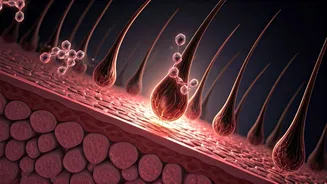
the very structure of our hair. However, their significance extends far beyond mere structural provision. Unlike conventional vitamin supplements that simply offer raw materials, peptides function as sophisticated signaling molecules within the body. They actively communicate with cells, prompting specific actions. In the context of hair vitality, certain peptides are recognized for their ability to bolster the health of hair follicles, enhance blood flow to the scalp, and crucially, extend the active growth phase (anagen) of the hair cycle. This remarkable signaling capacity is precisely what distinguishes peptides from earlier generations of hair support supplements.
Biomimetic Brilliance
The forefront of hair supplement innovation features biomimetic peptides. These are meticulously crafted molecules, developed in laboratories to precisely mimic the body's own signaling proteins. Their design prioritizes enhanced stability and superior absorption when ingested orally. Scientific investigations suggest that oral peptides can achieve a remarkable systemic bioavailability, ranging from 74% to 99%, contingent on their molecular size and the administered dosage. For instance, studies focusing on oral collagen peptides have revealed that approximately 15% to 20% of the intake is absorbed into the bloodstream as active fragments, capable of eliciting tangible biological responses. This highlights a critical point: the efficacy of these supplements hinges not only on consumption but also on the proportion of the ingredient that reaches the bloodstream in a bioavailable, functional state.
Gummy Gratification
The surging popularity of peptide-infused gummies is a confluence of behavioral science and biological efficacy. Dermatologists consistently underscore that regular, consistent intake is paramount for achieving results, often more so than the potency of the formulation itself. Most hair support products necessitate a commitment of three to six months of continuous use to yield visible improvements. Gummies transform this often-tedious supplementation routine into an enjoyable daily ritual, significantly boosting long-term adherence. Furthermore, the contemporary gummy formulations have evolved, moving away from high-sugar content. Many leading brands now offer sugar-free or low-glycemic options, often enhanced with natural sweeteners and prebiotic fibers, aligning with emerging research that connects gut health to hair vitality. Consumers are also seeking clearer product information; modern labels explicitly detail the specific peptide types, their precise dosages, and complementary nutrients, signifying a shift towards more evidence-based product development.
Key Ingredients Spotlight
When evaluating peptide-based hair gummies, several key ingredients warrant particular attention due to their specific benefits. Copper Peptides are frequently highlighted for their potential to support larger follicle size and possibly influence dihydrotestosterone (DHT) levels, a hormone implicated in pattern hair thinning. Biotinoyl Tripeptide-1 is another significant player, believed to fortify the hair shaft's attachment within the follicle, thereby potentially mitigating hair shedding. Additionally, Hydrolyzed Collagen Peptides offer a crucial supply of specific amino acids that are vital for maintaining the structural integrity and strength of the hair shaft itself, contributing to overall hair resilience and health.
Research Insights
While extensive long-term research is still in its nascent stages, the preliminary findings regarding peptide-based hair supplements are highly encouraging. One notable randomized, placebo-controlled trial indicated that participants consuming a daily hair gummy supplement for a duration of six months experienced an approximate 10% increase in hair density. In contrast, the group receiving a placebo observed a decline in hair density. It is important, however, to maintain realistic expectations. Peptide-infused gummies are designed to provide nutritional support and should not be regarded as standalone medical treatments. They can contribute positively to follicular health and density, but they are not a substitute for clinical interventions for conditions such as androgenetic alopecia or hair loss stemming from autoimmune issues.
A Holistic Approach
From a medical practitioner's viewpoint, peptide gummies are most effective when integrated into a comprehensive hair care strategy. The most favorable outcomes are typically observed when supplementation is combined with other supportive lifestyle factors. These include adhering to a well-balanced, protein-rich diet, employing targeted topical treatments (such as rosemary-infused oils or peptide serums), ensuring adequate sleep, and effectively managing stress levels. Furthermore, seeking professional evaluation is crucial for individuals experiencing persistent or severe hair fall. It's vital to remember that hair growth is an intrinsically slow, cyclical process. Even with the most advanced formulations, patience is key; initial visible improvements often take at least 90 days, with more substantial changes typically apparent around the six-month mark.
The Evolving Landscape
The burgeoning popularity of peptide gummies signifies a significant evolution within India's nutraceutical market. This shift marks a transition from generalized vitamin supplementation towards more precise, molecular-level signaling for health benefits. While these products are not miraculous cures, they represent a scientifically grounded advancement for individuals seeking to cultivate thicker, stronger, and more resilient hair. For consumers navigating this increasingly sophisticated category, fundamental principles remain crucial: meticulously examine the ingredient list and prioritize consistent usage. The delivery format might be enjoyable, but the underlying science of hair growth remains firmly rooted in biological principles.