




Sacred Sanctuary Amidst Peaks
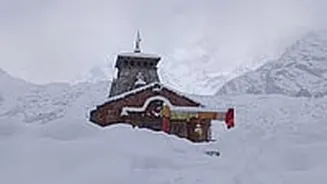
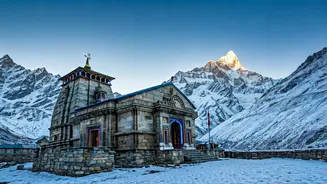
Perched at an impressive altitude of approximately 3,680 meters (12,073 feet) in Uttarakhand's Rudraprayag district, the Tungnath Temple stands as a beacon
of spiritual devotion. This ancient shrine, revered as the highest Shiva temple globally, is an integral part of the sacred Panch Kedar pilgrimage circuit. Its strategic location is as remarkable as its spiritual significance, situated atop a ridge that acts as a natural divider for the waters of the Mandakini and Alaknanda rivers, sources for the revered Kedarnath and Badrinath respectively. The peak above the temple is the origin of three springs that give rise to the Akashkamini River. From the adjacent Chandrashilla peak, panoramic vistas unfold, showcasing majestic Himalayan giants like Kedarnath, Chaukhamba, Neelkanth, and Nanda Devi, offering a spiritual and visual spectacle.
Ancient Lore and Devotion
The history of Tungnath Temple is steeped in profound mythological narratives, believed to be over a millennium old. According to ancient legends, following the epic Mahabharata war, the Pandavas, seeking divine absolution for their transgressions, embarked on a quest to appease Lord Shiva. The deity, in an effort to evade them, transformed into a bull and vanished into the earth. It is believed that his divine body parts manifested at five distinct locations, which are now venerated as the Panch Kedar shrines. At Tungnath, specifically, the divine arms (bahu) of Lord Shiva are said to have appeared, imbuing the site with immense sanctity and drawing devotees from far and wide.
The Pilgrimage Path
Visiting Tungnath is an experience that blends spiritual fulfillment with a deep connection to nature. The ideal periods for a pilgrimage are between April and June, and again from September to November, when the weather is most conducive. For those with a passion for trekking and an affinity for natural beauty, Tungnath presents an unparalleled destination. The journey to the temple involves a trek from Chopta, a picturesque village often referred to as the 'Mini Switzerland of India.' This approximately 3.5-kilometer trek is moderately challenging but rewards adventurers with breathtaking views of snow-capped peaks such as Nanda Devi, Trishul, and Chaukhamba, solidifying its status as a favored spot for both spiritual seekers and adventure enthusiasts.