






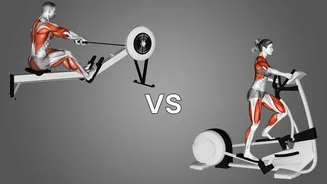

Rowing's Total Body Engagement
Rowing stands out as a low-impact exercise that simultaneously engages a multitude of muscle groups, making it a highly efficient workout for overall muscle tone.
The primary muscles worked include those in the back, shoulders, arms, and legs, with a significant activation of the core muscles to maintain stability and power the stroke. The rhythmic, repetitive nature of rowing not only builds muscular strength over time but also enhances cardiovascular endurance, contributing to a healthier heart and efficient calorie expenditure. This dual benefit of strength and aerobic conditioning makes rowing a well-rounded choice for individuals looking to improve their physical condition without placing excessive stress on their joints. Its ability to provide a comprehensive workout makes it a strong contender for achieving a toned physique.
Kickboxing's Dynamic Power
Kickboxing offers a high-energy, dynamic approach to fitness, blending martial arts techniques with intense cardiovascular training. This discipline targets a broad spectrum of muscles, including those in the arms, legs, and core, with particular emphasis on the glutes due to the explosive nature of kicks. The rapid-fire combination of punches and kicks significantly elevates the heart rate, acting as a potent cardio workout while simultaneously improving agility and hand-eye coordination. The varied and powerful movements inherent in kickboxing consistently challenge the body, fostering significant muscle toning and promoting a lean, athletic physique. It's an invigorating activity that promises both a physical challenge and significant aesthetic results.
Calorie Burn Showdown
When it comes to shedding calories, both rowing and kickboxing prove to be formidable allies, though they differ in their intensity and resultant burn rate. Rowing, when performed at a moderate pace, can help an average individual incinerate approximately 300 calories within a 30-minute session. In contrast, kickboxing, owing to its high-intensity nature and explosive movements, boasts a higher caloric expenditure, potentially burning up to 500 calories in the same 30-minute period. This significant difference highlights kickboxing's edge for those prioritizing rapid calorie consumption and a more intense cardiovascular challenge, while rowing offers a steadier, lower-impact approach to calorie burning.
Flexibility and Injury Prevention
Integrating flexibility exercises is crucial for injury prevention, regardless of whether you choose rowing or kickboxing. For rowers, dedicating time to stretching the muscles of the back and legs post-workout is essential to maintain mobility and prevent tightness. Kickboxers, on the other hand, benefit immensely from dynamic stretches performed before training sessions. These pre-workout movements prepare the joints and muscles for the rapid and impactful motions characteristic of kicks and punches, reducing the likelihood of strains or sprains. Consistent and appropriate stretching enhances the body's range of motion, thereby safeguarding against potential injuries and ensuring sustained progress in either fitness discipline.