







Urban Navigation Mastery
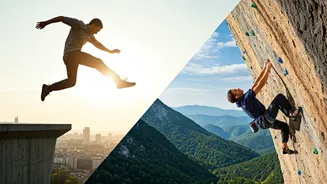
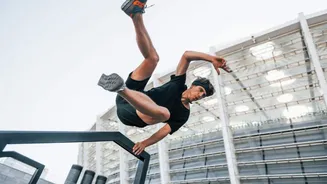
Parkour is a discipline that transforms the urban environment into a playground for movement. Practitioners, known as traceurs, learn to perceive buildings,
walls, and gaps not as barriers, but as opportunities for dynamic traversal. This involves an intricate mental mapping of the surroundings, where every jump, climb, and vault is calculated based on precise estimations of distance, angle, and trajectory. The constant demand to assess a situation rapidly and adapt movement strategies on the fly significantly sharpens one's ability to quickly understand and interact with any new space. This dynamic engagement also fosters heightened reflexes and an intuitive approach to problem-solving, as traceurs must constantly devise creative solutions to overcome physical challenges presented by the environment. The fluidity and precision required in parkour are direct results of this cultivated spatial acuity, making practitioners exceptionally attuned to their physical context.
Rock Formation Insight
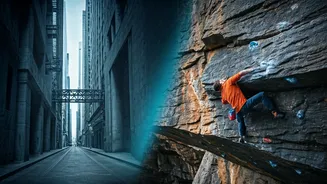
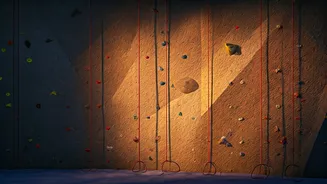
Bouldering, a captivating form of climbing performed on shorter walls or natural rock formations without ropes, necessitates a profound understanding of three-dimensional space. Climbers must meticulously analyze the rock's surface, identifying stable holds, understanding the subtle nuances of inclines and overhangs, and recognizing potential weaknesses or hazards. This process requires an advanced level of spatial awareness as they meticulously plan each sequence of moves, often visualizing the path ahead before committing to a climb. The intense focus on gripping and balancing on individual holds also cultivates exceptional fine motor control and a deep proprioceptive sense, allowing climbers to precisely understand their body's position in relation to the wall. This intricate interplay with the rock face hones a climber's ability to interpret and navigate complex vertical environments with precision and grace.
Calculated Risk Management
Both parkour and bouldering inherently involve calculated risks, pushing practitioners to develop a keen sense of safety and foresight. In parkour, traceurs must meticulously evaluate their environment for potential dangers such as unpredictable traffic, uneven ground, or unstable structures, ensuring their movements are both bold and secure. Similarly, bouldering demands that climbers assess the reliability of handholds and footholds, while also ensuring that the landing area below is safe and clear. This constant emphasis on risk assessment and mitigation is a crucial component of how these activities enhance overall spatial awareness. It cultivates a mindset where individuals are encouraged to think critically about the consequences of their actions and to proactively identify and manage potential hazards within their immediate surroundings.
Agility and Coordination
Regular engagement with either parkour or bouldering leads to substantial improvements in physical agility and overall coordination. Parkour demands a complex interplay of various muscle groups, requiring practitioners to execute a wide range of movements—from precise jumps to fluid rolls—with efficiency and control as they navigate an obstacle course. Bouldering, on the other hand, emphasizes building functional strength through dynamic climbing sequences that challenge balance, flexibility, and core stability. Both disciplines contribute significantly to enhancing an individual's agility by promoting a heightened awareness of their body's capabilities and limitations in relation to the physical space they occupy, fostering a more dynamic and responsive physical presence.