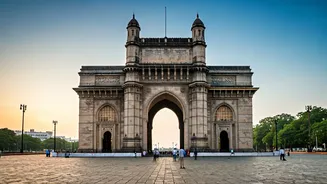

Gateway of India
The Gateway of India, a grand arch, is arguably Mumbai's most recognizable landmark. Erected to commemorate King George V and Queen Mary's visit to India in 1911,
the monument faced completion in 1924. This basalt archway, standing tall at 26 meters, has witnessed countless historical events and served as a symbolic entry point for dignitaries and officials throughout the British Raj. The site also offers stunning views of the Arabian Sea, enhancing its appeal as a popular spot for both tourists and locals. The Gateway of India continues to symbolize Mumbai's connection to its past and remains a vibrant hub for cultural activities and social gatherings.
CSMT: A Historic Station
Chhatrapati Shivaji Maharaj Terminus (CSMT), formerly known as Victoria Terminus, is a UNESCO World Heritage site and a masterpiece of Victorian Gothic architecture. Designed by British architect Frederick William Stevens and completed in 1888, the station reflects the grandeur of the British colonial era. Its intricate carvings, towering domes, and stained-glass windows showcase the meticulous craftsmanship of that time. CSMT continues to be a bustling railway hub, connecting millions of commuters daily, while also preserving its historical essence. This blend of functionality and beauty makes CSMT a testament to Mumbai's enduring heritage.
Asiatic Society of Mumbai
The Asiatic Society of Mumbai, a distinguished institution, holds a prominent place in the city's cultural landscape. Founded in 1804, it houses a vast library of historical documents, rare manuscripts, and ancient texts. The society's library is a treasure trove for scholars and history enthusiasts, offering invaluable insights into India's rich past. The structure itself, with its colonial-era architecture, contributes to the society's historical significance. Beyond its academic pursuits, the Asiatic Society of Mumbai plays a crucial role in preserving Mumbai's intellectual and cultural heritage, making it an essential visit for those seeking a deeper understanding of the city's past.
St. Thomas Cathedral
St. Thomas Cathedral, situated within the Fort area of Mumbai, holds a significant position as one of the oldest churches in the city. The construction of the cathedral began in 1676, taking a considerable time to be completed, and its rich history is interwoven with Mumbai's colonial past. Inside, you'll find impressive architectural features and historical relics, creating a tranquil atmosphere. The cathedral stands as a place of worship and a testament to the city's religious diversity and historical depth. Visiting St. Thomas Cathedral provides an engaging insight into Mumbai's religious landscape and its colonial legacy.
Elephanta Caves
Located on Elephanta Island, a short ferry ride from Mumbai, the Elephanta Caves are a UNESCO World Heritage site and a significant example of ancient rock-cut architecture. The caves, dating back to the 5th to 8th centuries, are dedicated primarily to the Hindu god Shiva and showcase intricate carvings and sculptures. The main cave features a massive Trimurti sculpture, depicting three faces of Shiva, and demonstrates the artistic skill of the era. Exploring the Elephanta Caves offers a window into India's rich artistic and religious traditions, making it a captivating day trip from Mumbai.
Rajabai Clock Tower
The Rajabai Clock Tower, located within the University of Mumbai campus, is another architectural marvel. Completed in 1878, the tower stands at approximately 85 meters and showcases a blend of Gothic and Venetian styles. Its design was inspired by the Big Ben clock tower in London. The tower's intricate details and the impressive height make it a striking sight. Although public access to the clock tower's interior is usually restricted, its exterior appearance is awe-inspiring and adds to Mumbai's architectural elegance. The Rajabai Clock Tower, designed by Sir George Gilbert Scott, remains a prominent part of the cityscape.