






Taj Mahal's Elegance
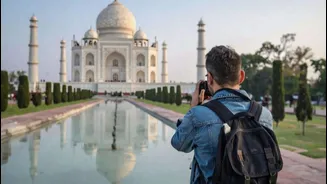
The Taj Mahal in Agra stands as a quintessential emblem of India's UNESCO World Heritage recognition. Commissioned by Mughal emperor Shah Jahan to honor
his beloved wife Mumtaz Mahal, this magnificent mausoleum is a masterpiece of architectural fusion, harmoniously blending Persian, Islamic, and Indian design elements. Since its designation in 1983, it has remained an unparalleled attraction, drawing an immense influx of international visitors eager to witness its ethereal beauty. The pristine white marble structure, set against the Yamuna River, is a testament to enduring love and a pinnacle of Mughal architectural achievement, making it a mandatory stop for anyone exploring India's rich historical tapestry. Its intricate inlay work and symmetrical gardens further enhance its allure, solidifying its status as a global icon.
Ellora's Rock-Cut Wonders
Journey to Maharashtra to uncover the Ellora Caves, an extraordinary complex that highlights the harmonious coexistence of multiple faiths. Carved between the 6th and 11th centuries, these caves represent the zenith of Buddhist, Hindu, and Jain artistic expression etched directly into the rock face. The absolute showstopper within this expansive site is the Kailasa Temple, a colossal monolithic structure dedicated to Lord Shiva. This remarkable feat of engineering and artistry captivates both domestic pilgrims and international travelers, offering a profound glimpse into the spiritual and artistic fervor of ancient India. The sheer scale and detail of the carvings, depicting mythological scenes and deities, are awe-inspiring, making Ellora a vital destination for understanding India's diverse religious heritage.
Ajanta's Painted Stories
Travel back to the 2nd century BC with a visit to the Ajanta Caves in Maharashtra, a collection of rock-cut sanctuaries renowned for their exquisite mural paintings. These ancient artworks vividly narrate tales from the life of Lord Buddha, offering a serene and contemplative experience for all who wander through their hallowed chambers. The vibrant colors and intricate brushwork, preserved for millennia, provide invaluable insights into the artistry, beliefs, and daily life of ancient India. For aficionados of history and art, the Ajanta Caves are an indispensable destination, serving as a living canvas that echoes the aesthetic sensibilities and spiritual devotion of bygone eras.
Hampi's Ancient Capital
Explore Hampi in Karnataka, once the glorious capital of the Vijayanagara Empire, now an expansive open-air museum adorned with the ruins of magnificent temples and royal palaces. The landscape itself, dotted with dramatic boulder formations, creates a surreal and captivating ambiance, transforming a visit into an unforgettable journey through history. This historical treasure attracts a global and local following, all drawn to its profound historical significance and breathtaking architectural grandeur. Walking through Hampi feels like stepping into a bygone era, where the echoes of a powerful empire resonate amidst the weathered stones and ancient structures.
Khajuraho's Sculptural Art
Venture to Madhya Pradesh to witness the Khajuraho Group of Monuments, celebrated globally for their exceptionally intricate and often erotic carvings. Constructed between the 10th and 12th centuries under the Chandela dynasty, these temples are not merely religious sites but also vibrant depictions of human life and artistic prowess during that era. Their architectural magnificence and the detailed sculptural work continue to draw visitors from across the globe, intrigued by their historical context and artistic daring. Khajuraho offers a unique perspective on ancient Indian society and its sophisticated artistic traditions, making it an essential component of India's UNESCO heritage.