






The Great Night
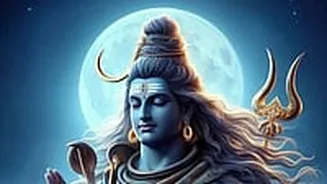
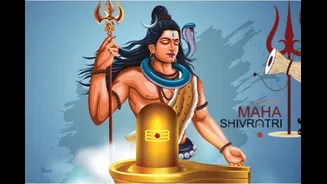
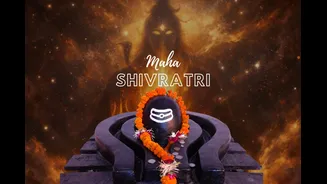
Maha Shivratri, celebrated annually in the Hindu month of Phalguna (typically February-March), stands out as a night of immense spiritual significance.
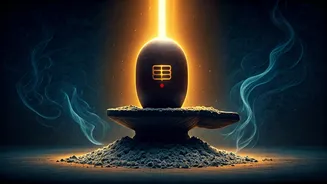
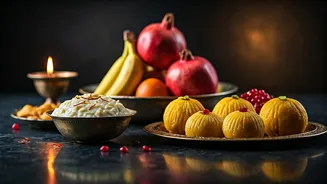
This sacred festival venerates the divine union of Lord Shiva and Goddess Parvati, symbolizing a profound spiritual awakening for devotees. The night is considered exceptionally potent, prompting followers to observe all-night vigils filled with prayer and the continuous chanting of the 'Om Namah Shivaya' mantra across four watches of the night. Many devotees undertake rigorous fasts throughout the day, often subsisting solely on fruits and milk, while some observe an even stricter 'nirjala' fast, abstaining from water entirely. This dedicated observance underscores the belief in the night's unique spiritual energy and its capacity to facilitate inner transformation.
The Panchakshari Mantra
At the heart of Maha Shivratri's spiritual practice lies the 'Om Namah Shivaya' mantra, revered as the Panchakshari Mantra due to its five sacred syllables: Na, Ma, Shi, Va, and Ya. Each of these components is deeply symbolic, representing the five fundamental elements that constitute nature: earth, water, fire, air, and space. The mantra serves as a profound reminder of the inherent balance within the universe and, by extension, within oneself. Its translation, 'I bow to Lord Shiva' or 'I honor the divine within,' encourages a sense of humility and surrender. By chanting these syllables, devotees aim to align themselves with the cosmic order, fostering inner peace and spiritual progression. The very essence of the mantra is a recognition of the divine presence in all aspects of existence.
Cosmic Resonance
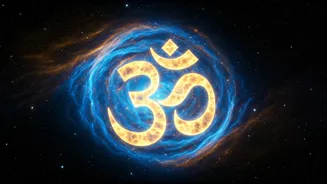
The mantra's power is further amplified by the inclusion of 'Om,' considered the primordial sound of creation in Hinduism. This sacred syllable is not merely a sound but a vibration that is believed to be the origin of the entire universe. 'Om' embodies the infinite and represents the ultimate reality. When combined with 'Namah Shivaya,' the complete chant acts as a conduit, connecting the individual consciousness to this universal cosmic vibration. The mantra, therefore, does more than just express devotion; it actively facilitates a sense of unity with the divine and the cosmos. Its recitation is thought to cleanse the mind of negative influences, elevate consciousness, and harmonize the soul with the subtle energies of the universe, making it an exceptionally potent tool for spiritual growth and enlightenment, especially on this auspicious night.