


The Art of Ikat
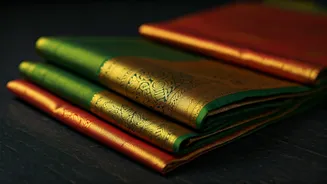
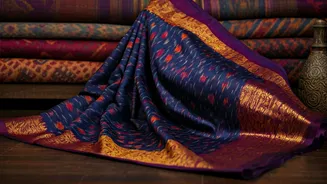
The Pochampally saree is a celebrated handwoven textile from Telangana, distinguished by its striking geometric patterns and the unique Ikat dyeing method.
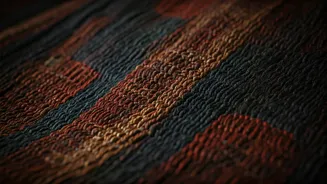
Originating from the village of Bhoodan Pochampally, these sarees are crafted by first designing and dyeing the yarn threads before the weaving process begins. This meticulous approach requires considerable foresight, accuracy, and mastery, as each thread is carefully bound and colored to form the final intricate design. The slightly softened edges of the patterns, a natural characteristic of this dyeing technique, have become a defining visual element of the Pochampally saree. Recognized with a Geographical Indication tag in 2005, Pochampally Ikat holds significant cultural and economic importance for the region. This craft connects nearly 80 villages and a multitude of artisan families, continuing a weaving tradition that has steadily flourished since the mid-20th century. Today, these sarees are highly sought after by consumers who appreciate heritage textiles with a strong, identifiable design aesthetic. Their structured motifs, balanced compositions, and enduring weave make them suitable for both celebratory events and formal attire, appealing across generations.
Historical Threads
The narrative of the Pochampally saree stretches back to the 19th century, with its weaving traditions gaining significant momentum in the 1950s. It was during this period that local artisans began to innovatively develop unique cotton and silk designs, aiming to establish a distinct regional identity for their craft. Although Ikat traditions were already present in states like Gujarat and Odisha, the artisans of Pochampally forged their own distinctive visual language. The craft’s influence soon spread to surrounding villages, creating a connected network. Presently, approximately 80 villages and over 10,000 weaving families are integral to its thriving ecosystem. The invaluable skills and knowledge are passed down through families, with patterns often being closely guarded and refined over successive generations, ensuring the continuity of this rich textile art form.
The Weaving Process
The very essence of Ikat, derived from the Malay word 'to tie' or 'to bind', perfectly describes the foundational technique. The process begins with the pattern being meticulously drawn on graph paper, serving as an exact blueprint for the subsequent dye application on the yarns. Following this design, specific sections of silk or cotton yarn are tightly wrapped to act as a resist, preventing dye penetration in those areas. The dyeing stage involves coloring these prepared yarn bundles in stages. For designs with multiple colors, the tying and dyeing steps are repeated with precision for each shade. Finally, the dyed threads are carefully arranged on the loom. As the warp and weft threads interlace, the pre-dyed segments align with remarkable accuracy, manifesting the final design and producing that signature soft-edged visual effect characteristic of Pochampally Ikat.
Ikat Variations Explored
The complexity and cost of a Pochampally saree are directly influenced by the specific Ikat variation employed. In 'Single Ikat,' either the warp threads (lengthwise) or the weft threads (crosswise) undergo the resist-dyeing process, while the remaining threads are left in their original solid color. Weft Ikat, in particular, is quite demanding, requiring constant alignment of the dyed threads during weaving, making it a more labor-intensive form. 'Double Ikat,' on the other hand, involves resist-dyeing both the warp and weft threads separately before they are woven together. This method demands exceptional skill and precision, as perfect alignment is absolutely critical; even minor discrepancies can disrupt the intended pattern. The successful execution of Double Ikat is a true hallmark of master weavers, showcasing an unparalleled level of artistry and technical proficiency.
Signature Motifs and Meanings
Pochampally sarees are celebrated for their bold, abstract geometric motifs, eschewing elaborate figurative imagery for structured design. Common elements include squares, diamonds, and circles arranged in repeating, balanced patterns that speak to symmetry and disciplined design. The 'diamond within a square' motif is often seen as a symbol of protection and interconnectedness, reflecting a sense of order in life. Natural elements like flowers, vines, and leaves are incorporated to signify growth and vitality, while the lotus, often paired with dots, carries connotations of purity and spiritual significance. Animal and bird motifs, such as parrots and elephants, are used to symbolize prosperity and wisdom. Furthermore, bold stripes and checks are employed to convey structure and strength within the overall composition. A distinctive feature is the 'Ganga-Jamuna' border, characterized by its dual-toned bands, representing the confluence of the sacred rivers Ganga and Yamuna, adding another layer of cultural symbolism to these exquisite textiles.