


Color Harmony Essentials
Achieving a cohesive look when layering rugs hinges significantly on the thoughtful selection of complementary colors. The aim is to pick shades that harmonize
with each other and the existing palette of your living room decor. For instance, if your foundational rug sports a palette of neutral hues, consider introducing a smaller accent rug that features vibrant patterns or contrasting colors. This approach allows for the infusion of visual dynamism and intrigue without overwhelming the overall aesthetic of the room, ensuring a balanced and pleasing visual experience. By carefully juxtaposing colors, you can subtly enhance the room's character and appeal.
Strategic Pattern Play
Incorporating a variety of patterns into your rug layering can introduce a sophisticated level of visual complexity, but it requires a strategic approach to avoid a chaotic outcome. The most effective method is to designate one rug as the dominant pattern, allowing the other layered rugs to feature more subdued or complementary designs. For example, a rug with a bold geometric motif can be effectively paired with smaller rugs showcasing subtle stripes or floral designs, provided they share a similar color scheme. This ensures a sense of unity and visual harmony, even while layering distinct patterns, ultimately contributing to a more layered and interesting floor design.
Textural Dimension
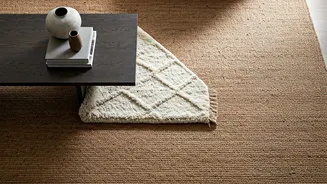
The deliberate incorporation of varied textures is a crucial element in creating depth and sensory richness within a layered rug arrangement. Imagine the tactile difference between a plush, high-pile wool rug and a more natural, flat-weave jute rug. Layering these distinct textures provides a compelling contrast that enhances both visual appeal and underfoot comfort. For example, placing a soft, luxurious wool rug atop a coarser jute base can offer a delightful sensory experience, inviting people to linger and adding a sophisticated layer of dimension to the floor design, making the space feel more inviting and complete.
Defining Zones
In open-plan living spaces, the artful layering of rugs serves as an invaluable tool for visually segmenting different functional areas without the need for physical dividers. A larger rug can effectively anchor a primary gathering spot, such as a seating area around a coffee table. Smaller accent rugs can then be strategically placed within or adjacent to this main zone to delineate secondary spaces, like a reading nook or a small workspace. This technique allows for the creation of distinct, yet interconnected, zones that enhance the usability and flow of the entire living area, providing structure and purpose to the open space.
Scale and Proportion
When undertaking the task of layering rugs, paying close attention to size and scale is paramount for achieving a balanced and aesthetically pleasing outcome. Each rug layer should complement the others in terms of dimensions, ensuring they fit together harmoniously without appearing cramped or disproportionate. A common and effective strategy involves selecting a generously sized base rug that forms the foundation of the arrangement. Smaller accent rugs can then be thoughtfully positioned to lie entirely within the borders of this larger rug, creating a sense of cohesion and preventing any single rug from looking out of place or overwhelming the composition.