
The Humble Idli
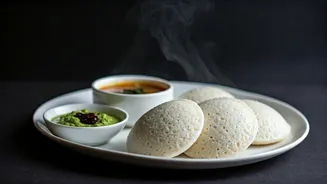
Idli, a breakfast staple across South India, holds a special place in the hearts of many. This dish is made from a fermented batter of rice and lentils,
a process that gives it its characteristic tang and soft texture. The fermentation not only contributes to the flavor but also enhances the digestibility of the dish. Idlis are typically steamed, a method of cooking that makes them light and healthy. Their simplicity is a testament to the South Indian culinary approach, where fresh, high-quality ingredients are allowed to shine. They're often served with sambar, a lentil-based vegetable stew, and coconut chutney, creating a balanced and flavorful meal enjoyed by people of all ages.
Puttu: A Kerala Favorite
Puttu, a beloved specialty from Kerala, is another steamed delight, celebrated for its unique preparation and taste. Made by steaming layers of coarsely ground rice flour and grated coconut, Puttu offers a delightful combination of textures. The rice flour is often mixed with coconut, providing a subtle sweetness and aromatic fragrance. Puttu is traditionally cooked in a puttu kutti, a unique cylindrical steamer, giving it its characteristic shape. It is typically served with kadala curry (black chickpea curry) or a variety of other curries and accompaniments. Puttu’s versatility extends beyond breakfast, often enjoyed as a light meal throughout the day, and it's a true representation of the diverse flavors of Kerala.
Dhokla: Gujarati Delight
Dhokla, a savory treat from Gujarat, introduces a different dimension to the world of steamed dishes. Unlike Idli and Puttu, Dhokla is made from a fermented batter of gram flour (besan). This fermentation process is key to the texture and flavor, yielding a light, spongy cake. The batter is typically seasoned with ginger, green chilies, and other spices, adding complexity to the taste. Dhokla is then steamed until it’s fully cooked and fluffy. It's often tempered with mustard seeds, curry leaves, and a touch of asafoetida, enhancing its aroma and taste. Commonly enjoyed with a sweet and tangy chutney, Dhokla exemplifies the Gujarati culinary tradition, where a balance of sweet, sour, and savory flavors is central.
Patra: Rolled-Up Goodness
Patra, also known as Patrode, is a rolled-up treat that originates from the western regions of India, particularly Gujarat and Maharashtra. This dish features colocasia leaves (taro leaves) coated with a spiced batter typically made from gram flour, tamarind, and various spices. The leaves are then rolled up and steamed, which sets the batter and tenderizes the leaves. After steaming, the rolls are often sliced and tempered with mustard seeds and other spices. Patra offers a wonderful combination of flavors and textures, with the slightly bitter taste of the colocasia leaves complemented by the tangy and spicy batter. It's a testament to how vegetables can be transformed into delicious and appealing meals. The preparation itself is an art, reflecting the culinary heritage of the regions from which it originates.
Modak: Sweet Steamed Dumplings
Modak is a sweet dumpling particularly associated with the Hindu festival of Ganesh Chaturthi, though enjoyed in many regions. These dumplings are typically made with a rice flour dough and filled with a sweet mixture of coconut and jaggery. The dough is shaped around the filling, and then the modaks are steamed, resulting in a soft, sweet treat. The coconut and jaggery filling provides a rich sweetness and a slightly chewy texture that contrasts beautifully with the soft exterior. Modaks often symbolize prosperity and are offered to Lord Ganesha, making them not only a delicious dessert but also an integral part of cultural and religious traditions. This delicacy showcases the importance of sweet treats in Indian cuisine, often enjoyed in moments of celebration.