






Ram Navami's Sacred Timing
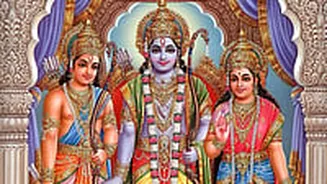
Ram Navami, a joyous celebration marking the birth of Lord Rama, is observed on the ninth day of Chaitra Navratri. In 2026, the exact date requires careful
consideration of lunar timings to pinpoint the Navami Tithi. According to precise astrological calculations, the Navami Tithi will commence on March 26, 2026, at 11:48 AM and conclude on March 27, 2026, at 10:06 AM. This overlap necessitates understanding the most auspicious period for the festivities. The period designated for the birth anniversary, known as the Madhyahna Muhurat, is considered the most sacred. For 2026, this auspicious window falls between 11:02 AM and 01:28 PM on March 27, with the midday moment specifically occurring at 12:15 PM. Adhering to these timings ensures devotees participate in the celebrations during the period believed to be the actual time of Lord Rama’s divine appearance.
Rituals and Devotion
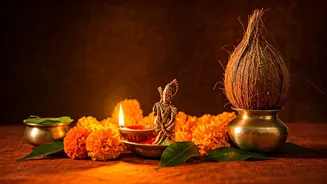
The observance of Ram Navami is steeped in tradition and devotion. Devotees often undertake a fast throughout the day, abstaining from certain foods and activities as a mark of respect and purity. The most significant rituals are performed during the Madhyahna Muhurat, the time believed to be Lord Rama’s birth. This period is ideal for engaging in special prayers, visiting temples dedicated to Lord Rama, and offering devotion. Beyond the veneration of Lord Rama, the ninth day of Navratri also honors Goddess Siddhidatri, the ninth manifestation of Goddess Durga. Devotees are encouraged to visit temples dedicated to her or perform puja at home, acknowledging her divine grace. The general guidelines for devotees during the preceding Chaitra Navratri and on Ram Navami itself include abstaining from alcohol, non-vegetarian food, tamasic (spiritually impure) foods, and smoking, fostering an atmosphere of spiritual cleanliness and reverence.
The Power of Siddhidatri
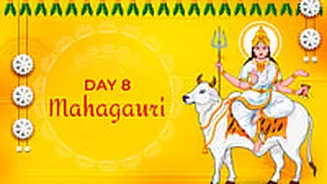
Maa Siddhidatri holds a revered position as the ninth and final form of Goddess Durga, worshipped on the concluding day of Navratri. The name 'Siddhidatri' itself is profoundly symbolic, derived from 'Siddhi,' meaning spiritual, material, or even supernatural accomplishments, and 'Datri,' meaning the bestower or giver. Therefore, Goddess Siddhidatri is the bestower of all accomplishments. She is traditionally depicted with four arms, elegantly holding a lotus in one hand, a discus (Chakra) and a conch shell (Shankh) in two others, and a mace (Gada) and a trident (Trishul) in the remaining two. This iconography signifies her immense power and her ability to grant boons and fulfill desires. Worshipping her on this auspicious day is believed to bestow profound blessings, leading devotees towards spiritual enlightenment and the attainment of their aspirations.