


Ancient Origins Uncovered
The story of dal, a staple in Indian cuisine, stretches back an astonishing 4,500 years, with its roots firmly planted in the Indus Valley Civilization
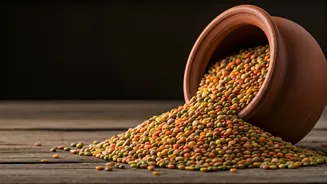
around 2500 BCE. Archaeological evidence strongly suggests that lentils were a fundamental component of the diet for early inhabitants of the subcontinent, providing essential nutrition and laying the groundwork for dal's enduring significance. This early reliance on pulses established their central role in the Indian culinary landscape, a tradition that continues to this day, showcasing the deep historical connection between the land and its people through this simple yet profound foodstuff. The foundational importance of lentils during this ancient period cannot be overstated, as it set the stage for the dish's subsequent cultural and culinary development across millennia.
Echoes in Ancient Texts
Beyond archaeological findings, historical manuscripts also shed light on dal's presence in celebratory contexts from antiquity. References indicate that lentil preparations were not merely everyday sustenance but also featured prominently in feasts and significant events. One notable historical account links the marriage of Chandragupta Maurya, dating back to 303 BCE, to an early iteration of what is now known as ghugni. This dish, a type of spiced lentil preparation, remains a beloved street food snack in eastern India, particularly as a popular breakfast item. Such connections illustrate how dal dishes have been woven into the fabric of Indian social customs and rituals for over two millennia, evolving yet retaining their place in communal gatherings and daily life.
Royal Culinary Refinements
During the medieval period, dal underwent significant elevation in status within the opulent royal courts. The sophisticated technique of 'dum pukht,' a slow steam-cooking method, was instrumental in transforming simple lentils into refined dishes worthy of imperial menus. Among the various dals, chana dal emerged as particularly noteworthy, with court chefs dedicating considerable effort and expertise to its preparation. This era saw a move towards more elaborate recipes and extended cooking times, reflecting a growing appreciation for culinary artistry and a desire to showcase the versatility of this humble ingredient. The meticulous attention paid to dal in these historical royal kitchens highlights its transition from a basic necessity to a sophisticated gastronomic offering.
The Rise of Panchmel Dal
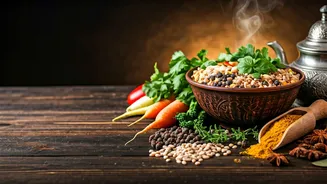
A testament to the ingenuity of Indian culinary traditions is the creation of 'panchmel dal,' also referred to as 'panchratna dal.' This dish masterfully combines five distinct types of lentils into a single, harmonious preparation. It is widely believed to have gained prominence within the royal household of Mewar before eventually becoming a favoured delicacy in the Mughal courts, gracing the tables of emperors like Shah Jahan and Aurangzeb. Intriguingly, some legends even attribute its origin to the epic Mahabharata, suggesting that Bhim himself slow-cooked a medley of dals in an earthen pot. This narrative underscores the dish's deep cultural roots and its appeal across different historical epochs and epic tales.
The Birth of Moradabadi Dal
The royal kitchens also gave birth to unique regional specialities, such as 'Moradabadi dal.' This preparation, a lighter version of moong dal, is said to have originated from an experimental dish created for Prince Murad. Characterized by its flavourful garnishes of finely chopped onions, fresh green chillies, and a touch of amchur (dried mango powder), it stands apart as a delightful snack rather than a main course. Its creation exemplifies the way royal patronage could foster innovation, leading to distinct dishes that catered to specific tastes and occasions, and which continue to be enjoyed for their refreshing and zesty profile.
Iconic Dal Makhni Emerges
Moving into the 20th century, a revolutionary culinary creation solidified dal's place in modern Indian cuisine: dal makhni. Restaurateur Kundan Lal Gujral, famed for also creating butter chicken, developed this iconic dish. He ingeniously blended urad dal and chana dal with rajma (kidney beans), simmered in a rich, creamy tomato gravy. The result was a decadent, slow-cooked lentil dish that quickly garnered immense popularity, not only within India but also on the global culinary stage. Dal makhni represents a contemporary evolution, showcasing how traditional ingredients can be transformed into rich, restaurant-style preparations that continue to captivate palates worldwide.