






Royal Court Origins
The bandhgala, often recognized as the Jodhpuri suit, boasts a distinguished lineage originating from the opulent royal courts of Jodhpur. This sophisticated
garment's roots are entwined with the attire of Rajput nobility, drawing inspiration from traditional Indian garments like the angarkha. A pivotal moment in its development is attributed to Maharaja Pratap Singh in the late 19th century. Legend has it that during a trip to England in 1897, he found himself without his luggage and needed a tailored outfit promptly. Collaborating with a Savile Row tailor, he refined the bandhgala into the structured form we recognize today. Later, Maharaja Umaid Singh, an aviator with a flair for style, further popularized the Jodhpuri boots, breeches, and the bandhgala, solidifying its association with princely elegance and comfort.
Colonial Influence & Adaptation
The intricate dance between Indian royalty and the British during the colonial era played a significant role in the bandhgala's evolution. As interactions between Indian rulers and the British increased, the bandhgala began to incorporate Western tailoring techniques, lending it a more refined and structured silhouette. This adaptation made it a suitable choice for formal diplomatic meetings and official engagements, where it showcased a blend of Indian heritage and European sartorial precision. Its growing prominence in these formal settings eventually caught the attention of the British themselves, influencing the adoption of similar garment styles within their own fashion sensibilities. This period marked a crucial step in the bandhgala's journey from a regional royal attire to a recognized formal wear option.
Symbol of National Identity
Following India's independence, the bandhgala assumed a new and powerful role as a potent symbol of national identity and burgeoning leadership. Prominent political figures, most notably Jawaharlal Nehru, embraced the bandhgala, popularizing it as the 'Nehru jacket'. This association cemented the garment's image with authority, governance, and a distinctively Indian ethos. Its adoption by leaders during crucial nation-building years imbued it with an aura of respect and national pride. The bandhgala transitioned from being solely a symbol of royal exclusivity to representing the aspirations and self-assuredness of a newly sovereign nation, becoming an integral part of the sartorial landscape of Indian public life and a visual marker of its unique cultural heritage.
Defining Bandhgala Features
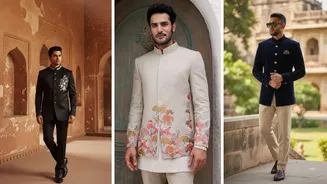
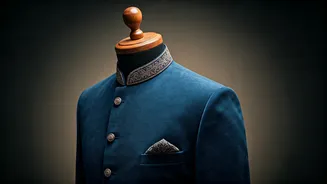
The enduring appeal of the bandhgala lies in its distinct design elements that contribute to its sophisticated and timeless aesthetic. Foremost is its characteristic high, stand-up collar, which fastens neatly, creating a clean and elongated neckline that conveys a sense of formality and elegance. Complementing this is its meticulously tailored structure; the jacket features defined shoulders and a close fit that sculpts the body, presenting a sharp and precise silhouette. The front is adorned with a single row of buttons, which can range from subtle fastenings to ornate decorative details, adding a touch of richness. The jacket's balanced length, typically falling just below the hips, ensures a proportional appearance and is often enhanced with a back vent, allowing for greater ease of movement. These key features collectively define the bandhgala's unique sartorial signature.
Modern Styling & Versatility
In contemporary Indian fashion, the bandhgala has masterfully shed its strictly formal or political connotations to become an exceptionally versatile wardrobe essential. It is frequently presented as a complete Jodhpuri suit, paired with matching slim-fit trousers, creating a cohesive and impeccably polished ensemble perfect for weddings and grand celebrations. However, modern styling also embraces contrasting combinations, where the bandhgala jacket is worn with trousers in a different fabric or color, adding a contemporary flair while maintaining an overall formal elegance. This adaptability allows the bandhgala to seamlessly integrate into a wide array of occasions, from traditional ceremonies and festive gatherings to high-profile social events, demonstrating its evolution as a flexible and stylish choice for the modern Indian man, far beyond its historical associations.
Contemporary Designer Interpretations
The bandhgala continues to be reinterpreted by a host of contemporary Indian designers, each infusing their unique vision into this classic silhouette. Raghavendra Rathore is celebrated for his aristocratic interpretations, emphasizing refined detailing and traditional Jodhpuri aesthetics. Kunal Rawal brings a modern edge with experimental cuts and layered bandhgalas, appealing to a younger demographic. Shantnu and Nikhil often incorporate structured, military-inspired elements, lending a bold and contemporary feel. Anita Dongre's designs feature elegant bandhgalas crafted with sustainable fabrics and intricate artistic motifs, showcasing a blend of tradition and eco-consciousness. Manish Malhotra is known for injecting vibrant colors and statement finishes into classic bandhgala forms, while Antar-Agni by Ujjawal Dubey offers minimal, draped, and asymmetric variations. Suket Dhir focuses on textured fabrics and subtle design innovations, and Gaurav Gupta introduces sculptural and futuristic elements. Divyam Mehta is recognized for his detailed embroidery and surface work, and designers like Kisah and Gargee skillfully merge tradition with modern tailoring and a fresh, contemporary flair, ensuring the bandhgala remains a dynamic and evolving icon in menswear.