




Vitamin Powerhouses
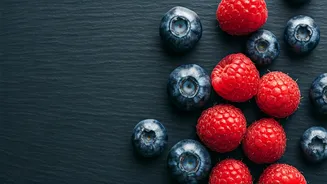
When it comes to vitamins, both blueberries and raspberries offer valuable contributions to your daily intake. Blueberries provide a respectable amount
of vitamin C, approximately 16% of the recommended daily value per cup, and also contain some vitamin K. However, raspberries significantly outperform blueberries in vitamin C content, delivering around 54% of the daily requirement per cup. Furthermore, raspberries boast a higher concentration of vitamin E compared to blueberries, a crucial nutrient known for its role in protecting your body's cells from oxidative damage.
Mineral Melange
Delving into mineral content reveals subtle distinctions between these popular berries. Both are sources of potassium and magnesium, essential minerals for various bodily functions. Blueberries contain approximately 114 mg of potassium per cup, while raspberries offer a slightly higher amount, around 186 mg per cup. Conversely, raspberries present a modest advantage in magnesium, providing about 22 mg per cup, compared to blueberries' 18 mg per cup. These variations, while small, contribute to their unique nutritional profiles.
Fiber Champion
Fiber is a cornerstone of a healthy diet, aiding digestion and promoting satiety, and both blueberries and raspberries are excellent sources. However, raspberries clearly lead in this category, offering a substantial eight grams of fiber per cup. In contrast, blueberries provide approximately four grams of fiber per cup. This significant difference means that incorporating raspberries into your diet can offer greater benefits for digestive health and help you feel fuller for longer periods, contributing to better appetite management.
Antioxidant Arsenal
Antioxidants play a vital role in defending your body against harmful free radicals, and both berries are rich in these protective compounds. Blueberries are widely recognized for their impressive antioxidant capacity, particularly due to anthocyanins, the pigments responsible for their vibrant blue hue, which are also linked to anti-inflammatory properties. Raspberries, while perhaps less celebrated for antioxidants than blueberries, are still potent sources, containing beneficial compounds like quercetin and ellagic acid, though in slightly lower concentrations than their blue counterparts.