




Threads of Tradition
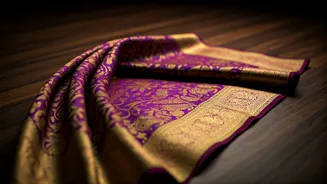
South Indian traditional sarees are renowned globally for their vibrant hues and elaborate weaving techniques. However, their aesthetic appeal is deeply
intertwined with a rich tapestry of symbolic meanings that extend far beyond mere ornamentation. For generations, artisans have found inspiration in the sacred geometry of temple architecture, the profound narratives of mythology, the serene forms of nature, and essential cultural objects. These inspirations were meticulously translated into textile patterns, effectively capturing collective cultural memory within the fabric. Each motif, whether adorning the borders or gracing the main body of the saree, once served as a direct reflection of prevailing belief systems, distinct regional identities, and cherished societal values. Far from being arbitrary decorations, these patterns acted as visual storytelling, a legacy passed down through numerous generations of skilled weavers. This practice was particularly influential in regions like Tamil Nadu, where the design language of prominent temple towns profoundly shaped the silk weaving traditions that continue to thrive and remain relevant in contemporary times. While many of these intricate symbols are still a common feature in bridal trousseaux and festive attire, their deeper significance is often overlooked. Understanding these woven elements offers a profound insight into how sarees function not just as clothing, but as powerful conduits of philosophy, devotion, and heritage, meticulously embedded within every thread across the centuries.
Rudraksha: Beads of Protection
The Rudraksha motif, inspired by the sacred prayer beads used in spiritual practices, presents itself as a repeating pattern of bead-like circles or oval shapes, frequently seen adorning the borders of South Indian sarees. This motif is steeped in symbolism, primarily representing divine protection, a deep sense of spirituality, and the cultivation of inner peace and tranquility. Its inclusion in everyday attire signifies the integration of devotion and spiritual awareness into daily life, serving as a constant reminder of one's connection to the divine and the pursuit of inner harmony. The recurring bead-like design evokes a sense of order and cyclical continuity, reinforcing the idea of a protective shield woven into the very fabric of the garment. It embodies the wearer's aspiration for a life shielded from negativity and imbued with spiritual fortitude, making it a cherished symbol of safeguarding and mindfulness in textile form.
Mayil: The Peacock's Grace
The Mayil, or peacock, motif is a celebrated symbol, intricately drawn from the ancient carvings found in the temples of Tamilakam. This stylized representation of the peacock is characterized by its elegantly elongated necks and elaborately ornate tails, which are rendered with artistic precision. Symbolically, the peacock represents profound concepts of beauty, the life-giving rains, and fertility, making it a potent emblem of abundance and auspiciousness. Furthermore, the peacock shares a particularly sacred association with Lord Murugan, the Hindu deity of war, victory, and wisdom, especially within the rich weaving traditions of Kanchipuram. Its presence on a saree imbues the garment with an aura of divine grace and prosperity, connecting the wearer to ancient traditions and the blessings of the deity. The visual grandeur of the peacock motif also reflects the aesthetic sensibilities of the region, showcasing the artistry of weavers who capture its majestic form with remarkable detail.
Annam: Swan of Wisdom
The Annam, or swan, motif is frequently observed in classical South Indian sculptural art and ancient mythological narratives, often depicted in graceful processions. This elegant motif signifies purity and profound wisdom, embodying the belief that the swan possesses the extraordinary ability to discern truth from falsehood, a concept eloquently echoed in the intricate temple carvings found at significant historical sites like the Brihadisvara Temple. The visual representation of the Annam in sarees evokes a sense of serenity, clarity, and discernment. It symbolizes the wearer's aspiration for inner wisdom and the capacity to navigate life's complexities with grace and insight. The motif serves as a constant reminder of the importance of purity of thought and the pursuit of knowledge, linking the garment to ancient philosophical ideals and the pursuit of spiritual enlightenment.
Gopuram Lines: Temple's Ascent
The Gopuram lines motif is characterized by its distinctive triangular and serrated patterns, which are directly inspired by the majestic, rising silhouettes of South Indian temple towers, or gopurams. These architectural forms are translated into woven patterns that symbolize spiritual ascent and the profound connection between earthly existence and the divine realm. The geometric precision of these motifs mirrors the awe-inspiring scale and intricate design of iconic architectural landmarks such as the Ranganathaswamy Temple. By incorporating the Gopuram lines into sarees, weavers not only pay homage to sacred architecture but also imbue the garment with a sense of spiritual elevation and divine linkage. This motif serves as a visual representation of a journey towards enlightenment and a reminder of the sacred spaces that represent the pinnacle of human devotion and architectural ingenuity.
Manga: Fertility's Flourish
The Manga, or mango motif, also known as Maankolam, is deeply rooted in the cultural significance of the mango fruit, which is considered highly auspicious. This motif typically takes the form of a curved paisley shape, often meticulously filled with floral designs or checkered patterns. Its primary symbolism revolves around prosperity, vitality, and the concept of continuity, making it a powerful emblem of life and abundance. The mango motif is closely associated with temple jewelry traditions, further cementing its status as a symbol of good fortune and fertility. When woven into a saree, it signifies a wish for the wearer's well-being, growth, and the enduring continuation of life's blessings. The organic, flowing lines of the paisley shape evoke a sense of natural growth and the richness of the earth, reinforcing its connection to fertility and prosperity.
Yali: Guardian's Might
Adapted from the robust pillar sculptures found in South Indian temples, the Yali motif depicts a formidable, lion-like guardian creature characterized by its flowing, dynamic curves. This mythical guardian embodies immense strength, unwavering courage, and royal authority. Frequently encountered in temple art across various regions, including places like Madurai, the Yali stands as a powerful symbol of protection against malevolent forces and negative energies. Its inclusion in a saree signifies a bestowal of strength, resilience, and a protective aura upon the wearer. The robust and often imposing depiction of the Yali conveys a sense of invincibility and steadfast guardianship, making it a potent symbol for those seeking empowerment and security.