







A Legacy of Health
World Health Day, observed every April 7th, commemorates the establishment of the World Health Organization (WHO) in 1948, a pivotal moment in the global
pursuit of public health. The inception of this international body, proposed by Brazil and China, was formalized with the signing of its constitution by 61 nations in 1946, officially taking effect on this significant date. Over its 78-year journey, the WHO has become instrumental in coordinating worldwide responses to critical health emergencies, including outbreaks like Severe Acute Respiratory Syndrome (SARS), Ebola, and the recent COVID-19 pandemic, alongside managing mPox. Beyond crisis management, the organization spearheads global initiatives against both infectious diseases, such as malaria, HIV, and polio, and non-communicable diseases like cancer and diabetes, tirelessly working towards universal health coverage. This includes a dedicated focus on primary healthcare, ensuring access to essential medicines and health products, nurturing the health workforce through training and policy advice, and enhancing health monitoring and data systems to foster a healthier planet for everyone.
Unity and Science Unite
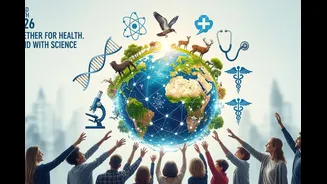
The theme for World Health Day 2026, 'Together for health. Stand with science,' powerfully underscores the symbiotic relationship between collaboration and scientific advancement in improving global well-being. This theme highlights the WHO's impactful role in enhancing public health outcomes, evidenced by a remarkable reduction of over 40 percent in global maternal mortality rates since 2000 and a decrease exceeding 50 percent in child mortality for those under five. The organization acknowledges the transformative power of technological and scientific breakthroughs, which have converted once-fatal health conditions like high blood pressure, cancer, and HIV into manageable concerns. As articulated by WHO Director-General Tedros Adhanom Ghebreyesus, science stands as humanity's most potent instrument for safeguarding and advancing health, citing life-saving innovations from vaccines and penicillin to advanced diagnostics like MRI machines and the Human Genome Project. These scientific achievements have profoundly improved health for billions. The WHO emphasizes that science must continue to be the guiding principle in all health-related decision-making, with WHO and its partners actively translating evidence across diverse health priorities, from infectious and chronic diseases to mental health, nutrition, and environmental factors, to support countries in delivering effective and equitable care.