
Culture for Calm
As the digital landscape expands with AI and constant notifications, a growing number of individuals are finding solace and mental decompression through
engagement with art and culture. Events like the Kala Ghoda Arts Festival in South Mumbai highlight this trend, where amidst the vibrancy, people are seeking out quieter spaces like galleries and museums not for their grandeur, but for the profound sense of stillness they offer. This shift signifies a move towards embracing cultural activities as a form of relief and a way to counterbalance the overwhelming nature of modern life. Across Indian cities, institutions dedicated to art and culture are observing a consistent increase in visitors, drawn to exhibitions and performances that encourage a slower pace and thoughtful engagement. This isn't just about leisure; it's about actively seeking experiences that help individuals reconnect with themselves and their surroundings, fostering a sense of presence in an increasingly digitized world.
Immersive Cultural Draws
The appeal of immersive cultural experiences has seen a significant upswing, drawing from a rich tapestry of disciplines, media, and cultural practices simultaneously. Interestingly, this surge in engagement with multi-faceted art forms has not diminished audiences for more traditional cultural events. Instead, art galleries and performance venues are experiencing rising footfall, mirroring the growth in both religious and secular festivals. The only sector showing a decline, according to observations, is the cinema hall industry, largely attributed to the widespread availability of streaming services. Mainstream cinema now primarily succeeds when it presents grand, spectacular productions. Data from 2025–26 reinforces this, indicating that while Over-The-Top (OTT) platforms continue to expand, in-person cultural interactions – including exhibitions, talks, workshops, and festivals – have experienced a strong rebound, especially among younger urban demographics actively seeking tangible, screen-free experiences. International research also corroborates the positive impact of museum visits and art appreciation on reducing stress and enhancing emotional regulation.
Museums: Spaces for Pause
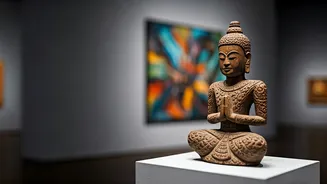
Institutions like the Chhatrapati Shivaji Maharaj Vastu Sangrahalaya (CSMVS) are at the forefront of this re-engagement with cultural heritage. An exhibition such as 'The Threads of the Past,' featuring over 300 ancient artifacts spanning from prehistoric times (5,000–6,000 years ago) to the 5th century CE, illustrates the enduring connection between art and human existence. This inclination towards art can be traced back to the early days of human civilization; the shift from nomadic lifestyles to settled agriculture brought about leisure time, which in turn fostered the creation of art and crafts. This innate drive to create remains powerful today. Even brief moments of free time often lead to a desire for creative expression, whether through visiting an art gallery, attending a performance, or engaging with literature. In our current era of AI and information saturation, art's role in fostering contemplation is particularly vital. Without art, our capacity for critical self-examination is diminished, potentially leading to a less aware and more perilous societal state.
Reasons for Return
For many, the allure of art and cultural spaces lies in their consistent ability to inspire and broaden perspectives. Regular visitors often describe galleries and exhibitions as spaces for learning, inspiration, and ongoing discovery, offering a chance to experience diverse forms of creativity. Attending events like folk art programs can evoke a sense of history and creativity, reinforcing the value of these cultural institutions. For younger generations, this engagement often stems from familial traditions, with childhoods spent attending art festivals and cultural gatherings, a practice that continues into adulthood and is shared with friends. This inherited appreciation fosters a comfort and familiarity with these spaces. For individuals like Mridula Gupta, art galleries are instrumental in expanding their mental horizons, providing insights into history and the flow of creative expression. While cinema remains a part of their leisure, art festivals hold a greater appeal for their enriching experiences.
Exhibitions and AI
The growing fascination with art is visibly reflected in the anticipation surrounding upcoming exhibitions nationwide. For instance, Dhoomimal Gallery in Delhi is garnering attention with 'Print Age,' an exhibition that critically examines the practice of printmaking in the age of artificial intelligence. By showcasing works from both renowned international artists and influential Indian modernists, the exhibition prompts viewers to pause and contemplate the intrinsic value of the handmade, especially when images can now be generated instantaneously. The enthusiastic reception for such exhibitions points towards a significant cultural discourse emerging in 2026: exploring the evolving meanings of authenticity, labor, and creativity in an era dominated by machine-generated content. Audiences are not merely observing; they are actively engaging in deep thought and critical analysis.
Public Art and Stillness
The quest for presence and tangible experiences extends beyond traditional gallery settings and into public art initiatives, such as festivals like Kala Ghoda, where art seamlessly integrates into the urban fabric. Artist and designer Vibhor Sogani observes a subtle yet significant trend: art galleries, festivals, and independent cultural venues are increasingly visited for moments of reflection and mental respite. In the midst of a bustling city, these spaces provide a much-needed slower cadence. This sense of stillness can become palpable during festival performances; for example, international Bharatanatyam dancer Apeksha Niranjan noted a collective calm during her performance at Kala Ghoda. Classical dance, she explains, doesn't impose itself but rather creates a suspended moment through its interplay of silence, sound, and expression, allowing audiences to deeply connect with their inner selves.
Cinema's Evolving Role
While attendance patterns at cinema halls have shifted, the appeal of films has not disappeared entirely. Art enthusiast Meghna Kochar suggests that people aren't abandoning cinema but are rather integrating it into a broader spectrum of cultural engagements. Today's festivals often attract more substantial funding and sponsorship compared to standalone film projects, transforming them into vibrant hubs where cinema, visual arts, and performance converge. Experiencing cinema as an integral part of a larger cultural event enhances its meaning and impact, offering a richer and more connected form of entertainment and artistic appreciation.
Art as an Anchor
Collectively, these evolving trends indicate a fundamental recalibration in the role of culture within public life. In our hyper-connected and rapidly paced world, art's function transcends mere entertainment or social prestige. It is increasingly recognized as an essential tool for emotional stability, fostering collective tranquility, and encouraging introspection. By prioritizing quiet contemplation in galleries over the clamor of the digital realm, valuing presence over relentless speed, and engaging in deep thought rather than passive consumption, audiences are rediscovering art's timeless capacity to help us pause, process our experiences, and reconnect with our innermost selves.

![[WATCH] 'Real Madrid, Ramadan and rest' - Mohammed Siraj how last-minute World Cup call-up changed February plan](https://g-mob.glance-cdn.com/public/fc/image/ByYT_LEmlrD0.webp)