


Selecting Your Style
When embarking on the journey to adorn your walls with vintage cartography, the initial and most pivotal step involves discerning the specific style of
map that best complements your personal aesthetic and the intended ambiance of your living space. The world of antique maps is remarkably diverse, offering a spectrum of visual narratives. You might find yourself drawn to the intricate details of nautical charts, which often showcase historical sea lanes, compass roses, and fascinating maritime illustrations, evoking a sense of exploration and the allure of the ocean. Alternatively, the precise layouts of vintage city plans could capture your imagination, presenting the bygone street grids, significant landmarks, and civic structures of once-thriving urban centers. For those with an appreciation for the earth's contours, topographical maps offer a unique perspective, rendering the elevation changes, mountain ranges, and river systems with an artistic flair. The choice here is deeply personal; consider which of these cartographic expressions sparks your curiosity and aligns harmoniously with your existing interior design choices, whether they lean towards the rustic, the modern, or the eclectic.
Strategic Placement Ideas
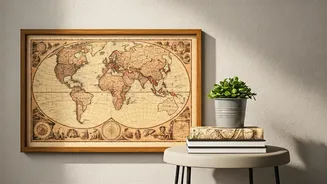
The strategic positioning of your chosen vintage map wall art is paramount to maximizing its visual impact and ensuring it enhances, rather than overwhelms, your interior design. For those commanding pieces that truly tell a story, dedicating a prominent wall space allows them to serve as a captivating focal point, drawing the eye and sparking conversation. Consider the main thoroughfares of your home – a large map commanding attention in your living area or entryway can set a sophisticated and adventurous tone from the outset. For smaller or complementary pieces, the art of curation comes into play. Grouping several smaller maps together can create a dynamic gallery wall, offering a richer tapestry of historical details and visual interest through their collective narrative. This approach is particularly effective in hallways or over a sideboard. When planning placement, it's also wise to consider the natural flow of movement within the room. Ensure your artwork is visible and accessible without impeding passage or creating a cluttered feel. The goal is to integrate the map seamlessly into the room's architecture and function, making it a celebrated feature rather than an obstacle.
Framing for Enhancement
Beyond mere protection, the framing of your vintage map wall art plays an instrumental role in elevating its aesthetic appeal and integrating it cohesively into your home's décor. The frame acts as a visual bridge between the artwork and its surroundings, so its selection warrants careful consideration. For spaces that exude a warm, comfortable, and inviting atmosphere, such as a country-style living room or a cozy den, consider the natural beauty and earthy tones of wooden frames. Options range from distressed finishes for a more rustic feel to polished oak for a touch of understated elegance. Conversely, if your home embraces a contemporary or minimalist sensibility, sleek, clean-lined metallic frames—perhaps in brushed silver, matte black, or even polished brass—can provide a sophisticated contrast that highlights the map's vintage qualities without clashing with modern design elements. Furthermore, the judicious use of matting can introduce an additional layer of visual depth and definition. A well-chosen mat can create a visual buffer, making the map stand out more prominently and preventing it from appearing lost within a larger frame. Experimenting with different mat colors and widths can dramatically alter the perceived size and impact of the artwork, allowing you to fine-tune the final presentation.
Versatile Room Integration
The inherent versatility of vintage map wall art allows it to transcend the confines of traditional living spaces and bring its unique charm to virtually any room in your home. In a dedicated home office, these historical charts can serve as a constant source of inspiration, fostering a sense of global perspective and igniting wanderlust for future travels or research endeavors. Their presence can transform a functional workspace into a more engaging and thought-provoking environment. For the bedroom, a vintage map can act as a gentle, evocative reminder of past adventures or a quiet testament to dreams of distant horizons yet to be explored, adding a layer of personal narrative to your sanctuary. Even the kitchen, often perceived as a purely utilitarian space, can benefit from the subtle inclusion of map elements. Smaller map prints can be artfully arranged on open shelving, nestled amongst culinary items, or used as decorative accents on a wall adjacent to your dining nook, adding an unexpected touch of sophistication and discovery to your daily routines. The key is to consider the scale and style of the map in relation to the room's primary function and existing décor.
Preserving Timeless Art
To ensure your cherished vintage map wall art retains its visual integrity and historical allure for years to come, attentive care and thoughtful preservation practices are essential. A primary concern is safeguarding the artwork from the detrimental effects of direct sunlight, as prolonged exposure can lead to irreversible fading and degradation of the paper and inks. Therefore, strategically positioning the artwork away from windows or using UV-protective glass in its framing can make a significant difference. Regular, gentle dusting with a soft, dry cloth is crucial for maintaining its cleanliness and preventing the accumulation of particulate matter that can dull its appearance over time. If your map is housed within a frame, it's advisable to periodically inspect the frame itself for any signs of wear, such as loose joints, scratches, or damage to the finish. Addressing these minor issues promptly can prevent further deterioration and ensure that the frame continues to support and enhance the artwork effectively, thereby safeguarding the historical artifact for future admiration.