






Unraveling the Myth
For ages, the idea that cracking knuckles inevitably leads to arthritis has been a persistent whisper, a common worry shared by many. This widespread belief
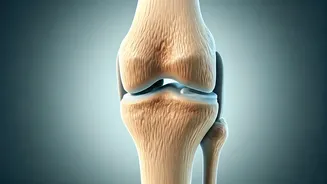
often stems from early, unsubstantiated medical observations. Some theorized that the audible 'crack' signified damage to the joint's cartilage or perhaps the forceful creation of air bubbles within the synovial fluid, the lubricant that keeps our joints moving smoothly. However, these notions were largely speculative and never stood up to rigorous scientific scrutiny. Over time, as research progressed, these early hypotheses were effectively disproven by various studies, paving the way for a clearer understanding of what truly occurs when one cracks their knuckles.
Scientific Scrutiny
To settle the long-standing debate, researchers have undertaken studies specifically to investigate the connection between knuckle cracking and the onset of arthritis. One particularly notable study followed a group of individuals, meticulously categorizing them as habitual knuckle crackers or those who abstained from the practice. This extensive research spanned an impressive two decades. The subsequent analysis of the findings revealed a striking absence of any significant difference in the prevalence of arthritis between these two distinct groups. This outcome provided strong empirical evidence, effectively debunking the persistent myth that the act of cracking one's knuckles directly contributes to the development of arthritis.
The Science of the Sound
So, what exactly is happening when you produce that distinctive popping sound? The phenomenon is rooted in the mechanics of your joints. When you pull or bend your finger to crack your knuckle, you are essentially stretching the joint capsule – the protective casing around the joint. This stretching action causes a sudden reduction in pressure within the synovial fluid. This low-pressure environment allows dissolved gases within the fluid, such as nitrogen and carbon dioxide, to rapidly come out of solution, forming tiny bubbles. The audible 'crack' or 'pop' that you hear is actually the sound of these newly formed gas bubbles collapsing or bursting, rather than any physical damage occurring to the cartilage or ligaments within the joint.
Benefits and Risks
While cracking your knuckles doesn't offer any direct, scientifically proven health benefits, many individuals report a temporary sense of relief from stiffness or a feeling of reduced tension in their fingers after the act. It's a subjective sensation rather than a physiological advantage. Conversely, there are potential drawbacks to consider, especially if the habit becomes compulsive or is performed with excessive force. In such instances, frequent and forceful knuckle cracking has, in some reported cases, been associated with the development of swelling in the affected joints. Additionally, persistent, habitual cracking could potentially lead to a decrease in grip strength over an extended period, though this is more commonly linked to the underlying compulsive behavior rather than the cracking itself.