





Essential Prep Steps
Before you even think about slicing into a kathal, a few crucial preparation steps will make the entire process remarkably smoother. First, select a long,
sharp knife; this is non-negotiable for precision and ease. Simultaneously, prepare a large container filled with 2 to 3 litres of ice-cold water. To this water, add 1 teaspoon of salt and 1 teaspoon of turmeric. This cold bath serves a dual purpose: it helps manage the sticky sap and maintains the jackfruit's vibrant colour. Now, for the critical sap-management phase: lightly oil both sides of your knife blade. Crucially, keep the knife handle entirely free of oil to ensure a secure grip and prevent slippage. Regarding your hands, apply oil *only* to your non-dominant hand. Oiling both hands increases the risk of the knife sliding, which can be hazardous.
Mastering the Cut
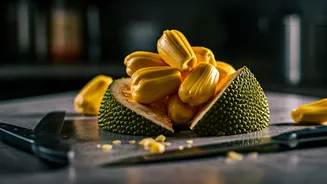
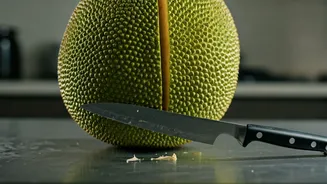
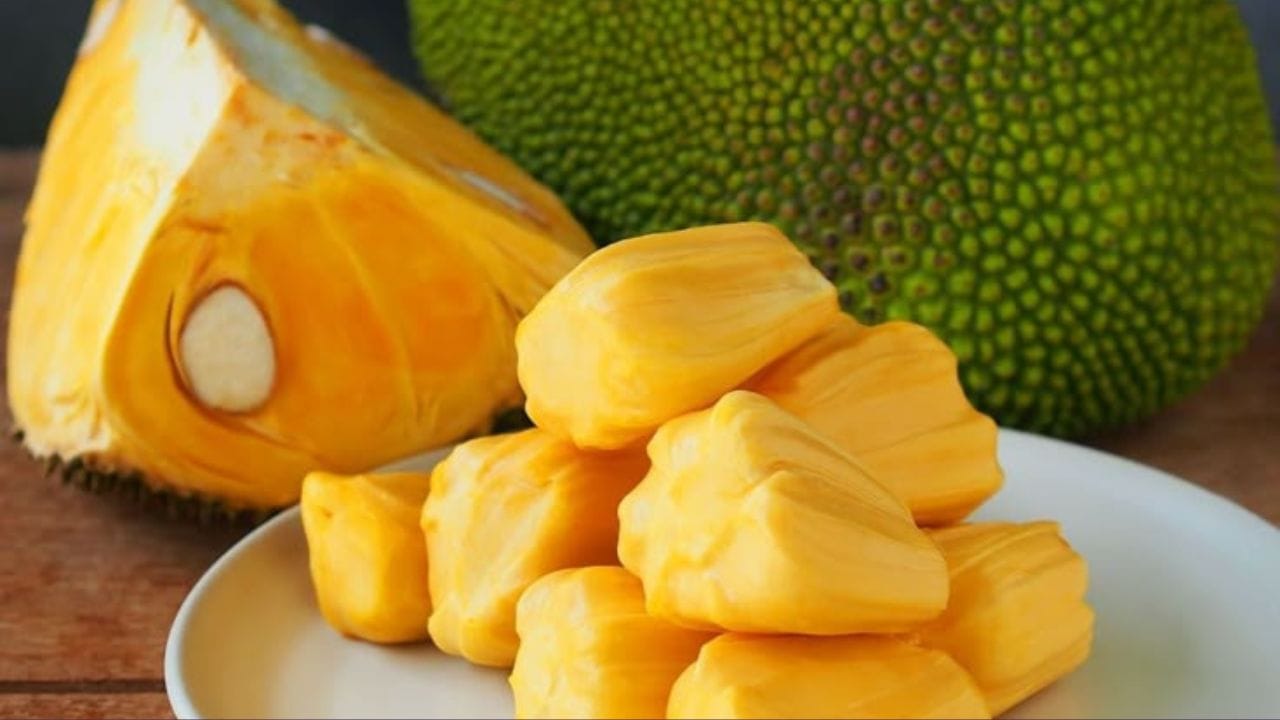
With your tools and prep complete, it's time to tackle the kathal itself. Begin by placing the jackfruit on a stable cutting board. Make a precise cut across the top, about 1.5 inches down from the stem. As soon as you make this incision, you'll notice the sticky sap oozing out. Immediately set the cut jackfruit onto an old newspaper or a spare plate to catch this viscous liquid. Allow it to rest for a minute, then, in a clever move, use the very piece you just cut off to gently scrape away the sap. Resist the urge to use your hands or knife for this task. Flip the jackfruit over and repeat the process by slicing the bottom end, again catching the sap. After another brief rest, use another cut section to wipe away any remaining residue. Now, re-oil both sides of your knife blade. Stand the jackfruit upright and slice it directly down the middle. The sap will predominantly emerge from the central core. Let it sit for approximately 30 seconds before scraping off the sap with a previously cut piece of the fruit. Proceed to cut each half lengthwise, creating long wedges. Stand these wedges upright and carefully peel off the tough outer skin, taking care not to remove too much of the edible flesh. Once peeled, cut these sections into half-inch slices, and then chop those slices into roughly one-inch chunks. Immediately transfer these prepared pieces into the prepared cold turmeric-salt water bath.
Finalizing and Storing
Continue the cutting process with the remaining sections of the jackfruit, diligently following the same steps of slicing, scraping, and transferring to the cold water bath. It's important to note that you should not remove the central stem; this structural element helps keep the fibrous chunks together during the cooking process. Once all your kathal pieces are submerged, allow them to soak in the cold water for a minimum of 15 to 20 minutes. This duration is crucial for further sap removal and to ensure the pieces are perfectly prepared for cooking. After soaking, carefully drain the water from the container. Spread the jackfruit pieces onto a clean towel and gently pat them dry. This ensures they are ready for immediate use in your recipes or for safe storage. Properly cut and prepped kathal can be stored in the freezer for later use, allowing you to prepare delicious sabzis or biryanis whenever the craving strikes, making this versatile ingredient a staple in your vegetarian culinary repertoire.