





Introduction to Shibori
Shibori is a venerable Japanese dyeing tradition, celebrated for its ability to imbue textiles with complex and visually striking patterns. This artisanal
craft has endured for centuries, consistently offering a rich source of inspiration for contemporary fabric artists and designers worldwide. The application of shibori techniques spans a broad spectrum, from the deeply saturated indigo hues commonly associated with traditional pieces to the modern integration into home decor and fashion. The enduring appeal of shibori lies in its blend of ancient methodology and its capacity to produce endlessly varied and captivating designs. This exploration will introduce five foundational shibori designs that have not only stood the test of time but also continue to be a significant influence on current textile artistry, showcasing the versatility and beauty inherent in this remarkable dyeing process.
Arashi Shibori: Stormy Patterns
Arashi shibori, a technique that translates to 'storm on the pole,' conjures dramatic visual effects by tightly winding fabric around a cylindrical pole. This binding process is meticulously executed using string or rubber bands, creating a tension that dictates the dye's penetration. Once dyed, the fabric unfurls to reveal striking diagonal lines, evocative of torrential rain or tempestuous storm fronts. This method is particularly favored in the fashion industry and for interior design elements, where its ability to impart a sense of dynamic motion and visual energy to fabrics is highly valued. The resulting patterns are both bold and unpredictable, making each piece a unique creation that adds a spirited, energetic quality to any textile application, from clothing to upholstery.
Itajime Shibori: Geometric Precision
Itajime shibori offers a path to achieving crisp, geometric patterns through a clamping process. In this method, the fabric is carefully folded into specific configurations and then secured between rigid boards, typically made of wood or metal. These boards, acting as resist elements, prevent the dye from reaching the areas they cover. When the fabric is dyed and subsequently unfolded, it reveals precise shapes such as perfect squares, triangles, or other defined geometric forms. This technique is highly appreciated for its efficiency in generating intricate and sharp designs with relative ease, making it a preferred choice for many textile artists seeking controlled, repeatable patterns without extensive manual manipulation.
Kumo Shibori: Delicate Webs
Kumo shibori, translating to 'spider' shibori, is a method renowned for creating delicate, web-like patterns. This effect is achieved by meticulously twisting and binding the fabric in various complex ways before it undergoes the dyeing process. The careful manipulation results in a fine network of lines and connections that strikingly resemble spider webs or ethereal cloud formations. This technique is ideally suited for lightweight fabrics like silk or fine cotton, where the subtle intricacy of the 'kumo' design can be fully appreciated and displayed to its best advantage. The resulting fabric possesses a refined beauty, adding a touch of delicate artistry to any textile piece it adorns.
Nui Shibori: Stitched Artistry
Nui shibori represents a more labor-intensive yet highly controllable form of shibori, relying on precise stitching to create patterns. In this technique, artists hand-sew along specific lines or outlines on the fabric, meticulously forming the desired design. After the sewing is complete, the threads are pulled taut, cinching the fabric and acting as a resist during the dyeing phase. This method offers a significant degree of creative control, enabling the generation of unique and custom patterns tailored to specific artistic visions. It is particularly favored for use on garments, as the stitched texture adds a tangible depth and visual interest that enhances the overall aesthetic appeal of the clothing.
Miura Shibori: Textured Lines
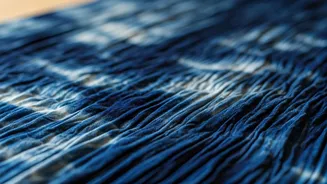
Miura shibori is characterized by its creation of numerous parallel lines and its contribution to fabric texture and dimension. This technique involves folding the fabric into tight, accordion-like pleats, which are then bound securely before the dyeing process. The result is a series of closely spaced, parallel lines that not only add a strong visual element but also a tactile quality to the material. Miura shibori is frequently applied to larger textile projects, such as quilts or wall hangings, where its ability to introduce both visual complexity and tactile interest is particularly beneficial. This versatility makes it a sought-after choice for adding character and depth to substantial fabric creations.