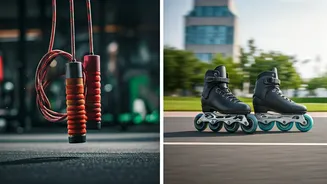






Heart Health showdown
Both jumping rope and roller skating are fantastic ways to give your heart a good workout, but they approach it with different styles. Jump rope is a high-energy
activity that gets your heart pumping rapidly, engaging numerous muscle groups while simultaneously honing your balance and coordination. The consistent motion of jumping is excellent for building cardiovascular endurance, enhancing the flow of blood and oxygen throughout your body. Consistently incorporating jump rope into your routine can lead to a stronger heart, improved circulation, and a reduced likelihood of developing heart conditions. On the other hand, roller skating offers a more leisurely yet equally beneficial cardiovascular exercise that's gentle on your joints. It's an enjoyable method to achieve your cardio goals, all while refining your equilibrium and coordination. Roller skating elevates your heart rate at a steadier pace, making it a wonderful choice for individuals who prefer a less strenuous but still highly effective approach to maintaining a healthy heart.
Calorie Burn Dynamics
When it comes to torching calories, both jump rope and roller skating are effective, but their intensity levels dictate the speed at which they work. Jump rope, due to its demanding nature, incinerates more calories in a minute, positioning it as the go-to for rapid calorie expenditure during shorter workout sessions. Roller skating, while burning fewer calories per minute, allows for extended periods of activity because of its moderate intensity. This sustainability makes it an excellent option for longer, enjoyable cardio sessions that can be maintained over time. The choice between them can depend on your available time and your preference for workout intensity versus duration in your calorie-burning strategy.
Accessibility and Ease
In terms of practicality, jump rope emerges as the more accessible option, requiring minimal gear and a small amount of space. This makes it an ideal activity for individuals who might have limited access to gyms or specialized workout areas, as it can be performed almost anywhere. Roller skating, however, necessitates specific equipment such as skates and a smooth, appropriate surface, like a dedicated rink or a well-maintained pavement. The availability of these conditions can be a limiting factor for some, potentially impacting how seamlessly roller skating can be integrated into a regular fitness regimen. Therefore, the ease of access can significantly influence which activity becomes a consistent part of one's lifestyle.