





Taj Mahal's Mughal Grandeur
On World Heritage Day 2026, the Taj Mahal stands as a timeless testament to love and architectural brilliance, recognized as a UNESCO World Heritage Site
since 1983. Located in Agra, Uttar Pradesh, this 17th-century imperial mausoleum graces the banks of the Yamuna River. While a year-round attraction, the period between October and March offers the most pleasant climatic conditions with cool mornings and clear skies, ideal for exploration. Visiting in April is also recommended, particularly at sunrise, to experience the soft light before the marble absorbs the day's heat. The structure is celebrated for its flawless symmetry, exquisite Mughal artistry showcased in its marble inlay work, and the meticulously planned gardens, a hallmark of imperial Mughal design. Entry fees are approximately Rs 50 for Indian nationals and Rs 1,100 for foreign nationals, with children under 15 gaining free admission. An additional Rs 200 is required for access to the main mausoleum chamber for all visitors. Beyond the iconic white marble mausoleum, visitors can immerse themselves in the elegant charbagh garden layout and explore the adjacent mosque and guest pavilion. For a deeper historical understanding, a visit to the nearby Agra Fort is highly recommended. Shoppers can find authentic marble inlay handicrafts in the local markets. Recommended accommodations include Paradiso at Verdant Acres, Aranya Villa at Bairagarh Living, and Vriksha Villa at Bairagarh Living.
Hampi's Vijayanagara Legacy
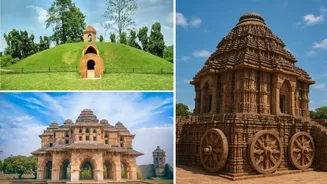
Hampi, a UNESCO World Heritage Site since 1986, invites travelers to step back into the glorious past of the Vijayanagara Empire. Nestled in northern Karnataka along the Tungabhadra River, this sprawling landscape is characterized by its dramatic granite boulder formations and the evocative ruins of an ancient urban settlement. The most pleasant weather for exploring its extensive heritage trails occurs between October and February, offering comfortable temperatures for walking. While April visits are possible, early morning excursions are advised as midday temperatures can become quite high. Hampi offers a unique glimpse into medieval urban planning, featuring a remarkable array of temples, bustling markets, sophisticated water management systems, and the remnants of royal enclosures. The entry fee is approximately Rs 40 for Indian nationals and Rs 600 for foreign nationals, with children under 15 admitted free. Key attractions include the Virupaksha Temple, the stunning Vittala Temple with its famous stone chariot, the royal enclosure, and the intricate stepped tanks. For an active experience, cycling across the heritage trail is highly recommended. Visitors can also climb Matanga Hill for breathtaking sunrise views, hire a local guide to explore the temple corridors, or venture out to discover traditional villages scattered around the ruins. Recommended stays include Agastya Villa in Badami.
Assam's Ahom Moidams
The Moidams of Assam, recently inscribed as a UNESCO World Heritage Site in 2024, represent a unique facet of India's rich cultural tapestry. Located in the Charaideo district, approximately 28 km from Sivasagar, these ancient royal burial mounds are intrinsically linked to the Ahom dynasty, which reigned for six centuries. The period between November and March offers the most favorable climate, with cooler temperatures and clearer skies, making it ideal for visiting. While summers are humid and monsoon months experience steady rainfall, the site holds significant ceremonial value and continues to be culturally important for the Ahom community. The entry fee is about Rs 20 for Indian, SAARC, and BIMSTEC nationals, and approximately Rs 250 for foreign nationals. The Moidams are recognized for their distinctive royal burial mound tradition, unique funerary architecture within India, and their representation of cultural continuity and living heritage. Key attractions in Charaideo include the royal burial mounds themselves, a dedicated site interpretation centre, and the scenic tea gardens in the surrounding areas. Visitors can enjoy walking across the burial mound complex, photographing the distinctive layered earthen structures, and visiting nearby historical sites like Rang Ghar and Talatal Ghar in Sivasagar. Exploring local monasteries and water tanks also offers a deeper insight into the region's heritage. Recommended accommodations include Destiny Lodge and Homestay, Platinum Lodge, and Juihal: The Ethnic Kitchen Stay.
Mahabalipuram's Rock-Cut Wonders
The Group of Monuments at Mahabalipuram, a UNESCO World Heritage Site since 1984, showcases the remarkable rock-cut architecture of the Pallava dynasty. Situated on the Coromandel Coast near Chennai, this coastal town enjoys a warm climate, with sea breezes offering some respite, especially during winter. The period from November to February is considered the most suitable for exploring these ancient sites. The monuments, carved directly into stone, include impressive rock-cut temples, monolithic structures, and intricate narrative relief panels that speak volumes about the artistic prowess of the era. Entry fees are approximately Rs 40 for Indian nationals and Rs 600 for foreign nationals, with children under 15 years old admitted free of charge. Mahabalipuram's UNESCO status is attributed to its pioneering monolithic rock-cut temple architecture, the exceptional sculptural quality from the Pallava period, and its striking narrative relief carvings displayed in open stone panels. Must-see tourist attractions include the iconic Shore Temple, the Pancha Rathas (Five Chariots), the massive Arjuna's Penance relief, and the various cave temples. Engaging activities include joining a guided sculpture walk, visiting active stone-carving workshops to witness traditional craftsmanship, strolling along the beach promenade, and exploring the local handicraft markets for souvenirs. For accommodations, options like Agam Villa and Perola do Mar are available.
Konark's Solar Temple
The Sun Temple at Konark, inscribed as a UNESCO World Heritage Site in 1984, is a magnificent testament to medieval Odisha's architectural and astronomical ingenuity. Located in Odisha, near the Bay of Bengal, the region experiences warm summers and mild winters, with the period from October to February offering the most comfortable weather for exploring the extensive stone complex. Designed in the form of a colossal chariot dedicated to the Sun God, this 13th-century temple is celebrated for its intricately sculpted wheels, which serve as sundials, and its precise alignment with the sun's celestial path. Entry fees are approximately Rs 40 for Indian nationals and Rs 600 for foreign nationals, with children under 15 years old granted free admission. The Sun Temple's recognition as a UNESCO site stems from its unique chariot-shaped temple design, its astronomical alignment reflecting a deep understanding of solar movement, and its detailed stone carvings that vividly depict life and culture in medieval Odisha. Key attractions at the site include the famously sculpted stone wheels, the main temple platform, the remains of the Natya Mandir (dance hall), and the Konark Museum. Visitors can enhance their experience by taking a guided heritage walk, studying the complex astronomical carvings, attending cultural performances during festival seasons, and visiting the nearby Chandrabhaga Beach. For stays, consider options like Lotus Eco Retreat (a coastal stay nearby) or Nature Camp Konark Retreat.