





The Calorie Conundrum
Many consumers opt for fast food salads with the assumption that they are inherently low-calorie, health-conscious choices. However, this perception often
doesn't align with reality. The ingredients and preparation methods employed by fast food establishments can elevate the calorie count of a salad to surprising levels, sometimes rivaling those of less healthy options. Understanding the components that contribute to this can empower individuals to make more informed decisions about their meal selections, ensuring they align with their health goals rather than inadvertently undermining them. It's crucial to look beyond the 'salad' label and examine the specifics of what makes up the dish.
Dressing Dilemmas
The choice of salad dressing can be a major determinant of a salad's overall calorie and fat content. While leafy greens and vegetables form a nutritious base, the accompanying sauce can quickly turn a light meal into a calorie-dense one. Creamy concoctions like ranch or Caesar dressing can each contribute well over 100 calories per serving, often laden with saturated fats and sodium. Even lighter-sounding options, such as vinaigrettes, can still add a substantial 50 calories or more, depending on their sugar and oil content. Being mindful of these additions and opting for dressings sparingly, or choosing lighter, oil-and-vinegar based alternatives, is a key strategy for managing caloric intake from your salad.
Toppings Takeaway
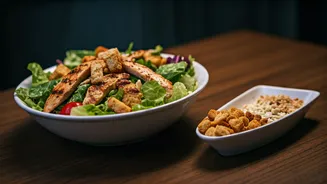
Beyond the dressing, the various toppings added to a fast food salad can significantly increase its calorie count. While these additions are often included for flavor and texture, they can pack a caloric punch. A simple handful of cheese can easily add over 50 calories, while crispy croutons, often used for crunch, can contribute another 30 to 50 calories per serving. Even seemingly healthy additions like nuts, though beneficial in moderation, can contribute upwards of 100 calories if portion sizes aren't carefully controlled. It's worth scrutinizing each topping to understand its impact on the final caloric tally of your meal.
Portion Ponderings
Fast food establishments often serve larger portion sizes than what might be considered standard for a home-prepared meal. A salad that appears generously sized might, in fact, contain a substantial number of calories, easily exceeding 500 calories once all the dressings and toppings are factored in. Being aware of these larger serving sizes is crucial for calorie control. Opting for a smaller salad or requesting a child's portion, if available, can be an effective way to manage your intake without completely sacrificing the enjoyment of a salad.
Ingredient Impact
The very ingredients chosen for a salad play a pivotal role in its final calorie count. While nutritious, ingredients like avocado are calorie-dense, with half a fruit contributing around 100 calories. Furthermore, the preparation method of certain items makes a significant difference. For instance, fried ingredients such as crispy tofu or chicken will add substantially more calories than their grilled counterparts – a serving of crispy tofu can easily add around 200 calories. Prioritizing grilled proteins and loading up on a variety of vegetables are excellent strategies for keeping the calorie count lower.
Customization Confidence
Transforming a potentially high-calorie fast food salad into a genuinely healthy choice is achievable through smart customization. A highly effective strategy is to request dressings on the side; this allows you to control the amount used, potentially cutting down on unnecessary calories by as much as 50%. Additionally, swapping out calorie-laden toppings for more vegetables not only boosts nutrient intake but can also reduce the overall calorie count by up to 100 calories per meal. By making conscious ingredient and condiment choices, you can tailor your salad to meet your dietary needs and preferences.