



Central Courtyards: Hearts of Homes
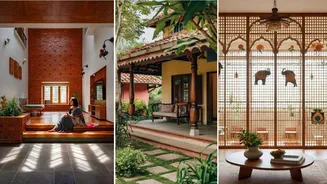
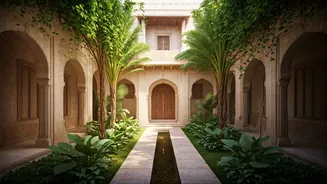
Traditional Indian homes often feature a central courtyard, known as an 'aangan' or 'wada'. This architectural element is crucial for drawing natural light
and vital ventilation directly into the core of the dwelling. More than just a source of illumination and fresh air, these courtyards serve as communal hubs, fostering family interaction and creating an expansive feel within the living space. The strategic placement and open design of courtyards also contribute to cooling the adjacent rooms, demonstrating a sophisticated understanding of passive climate control that enhances comfort and well-being throughout the house.
Verandahs: Gentle Transitions
The verandah, referred to locally as 'poomukham' or 'ota', functions as a crucial buffer zone, bridging the gap between the external environment and the interior of the home. This extended space is purposefully designed to encourage moments of rest and informal conversations, acting as an invitation to slow down the pace of daily life. It provides a shaded sanctuary from the harsh sun and unexpected rain, allowing residents to comfortably engage with the outdoors while remaining protected, thus enhancing the overall experience of living in the home.
Jaali Screens: Artful Light Play
Intricately designed 'jaali' screens are a hallmark of traditional Indian architecture, offering a beautiful solution for controlling light and privacy. These perforated panels allow sunlight and air to filter through, creating diffused illumination and a pleasant cross-breeze without compromising seclusion. The patterns cast by the light passing through the jaali add a dynamic, calming visual element to the interiors, transforming the play of light and shadow into an artistic feature that contributes to a serene atmosphere within the home.
Natural Materials: Warmth and Health
The use of natural materials such as teak wood, stone, earth, and terracotta is fundamental to the comforting and healthful qualities of traditional Indian homes. These elements imbue the spaces with an inherent warmth and tactile richness that synthetic materials often lack. Beyond their aesthetic appeal, these natural finishes contribute to a superior indoor environment, promoting better air quality and a general sense of groundedness and well-being for occupants.
Spiritual Corners: Inner Sanctuary
Many traditional Indian homes incorporate a designated space for spiritual practices, such as prayer or meditation. This dedicated 'spiritual corner' serves as a private retreat, offering a tranquil environment for quiet reflection and mindfulness. Such spaces provide a much-needed respite from the demands of everyday life, enabling individuals to connect with their inner selves and fostering a sense of peace and mental clarity within the domestic setting.
Nature Integration: Living Elements
Bringing the outdoors in is a key principle in traditional Indian home design, often achieved through the inclusion of indoor plants, sacred 'tulsi' planters, and water features. These natural elements are not merely decorative; they actively contribute to reducing stress and fostering a calming ambiance. The presence of living greenery and the gentle sound of water create a soothing environment that enhances the occupants' connection to nature and promotes overall emotional equilibrium.
Vastu Shastra: Harmonious Flow
The ancient Indian science of Vastu Shastra plays a significant role in the thoughtful arrangement of traditional homes. Its principles focus on aligning living spaces with natural energies and cosmic forces, aiming to create an environment of harmony and balance. By adhering to Vastu guidelines, these homes foster a sense of order and well-being that can profoundly impact the mental and emotional state of their inhabitants, promoting a more stable and peaceful existence.
Relaxation Nooks: Cozy Retreats
Comfortable and inviting 'relaxation nooks' are thoughtfully integrated into traditional Indian homes to provide cozy spots for unwinding. Features like swings ('jhoolas') or small, secluded alcoves are designed to encourage moments of leisure and personal comfort. These carefully crafted spaces add character to the home and offer warm, welcoming areas where residents can retreat, read, or simply relax, enhancing the overall sense of ease and domestic bliss.