






Understanding Parkinson's Disease
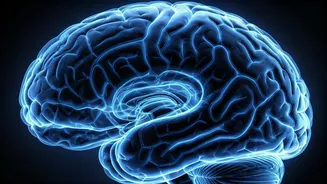
Parkinson's disease is a complex neurological condition primarily characterized by the progressive loss of dopamine-producing neurons in the substantia
nigra region of the brain. This deficit profoundly impacts motor control, leading to a range of movement disorders. While the exact causes remain elusive for about half of all cases, contributing factors can include exposure to certain toxins, adverse reactions to medications, or even past head injuries and infections. Affecting approximately 1% of individuals over the age of 65 globally, Parkinson's stands as the second most prevalent neurological disorder, trailing only Alzheimer's. The disease's progression involves significant neuronal damage, often marked by the formation of Lewy bodies, which are aggregations of alpha-synuclein protein. When dopamine levels plummet by 70-80%, nerve cell communication is severely disrupted, manifesting as initial symptoms like slowed movements and tremors, and escalating to more severe postural changes and a general reduction in the ability to perform daily tasks. Despite advances in conventional medicine, a definitive cure remains elusive, underscoring the need for comprehensive care strategies.
Ayurvedic Approach to Nerve Health
Ayurveda, the ancient Indian system of medicine, offers a holistic perspective on health, emphasizing balance and the inherent healing capabilities of the body. In the context of neurodegenerative conditions like Parkinson's, Ayurvedic principles focus on nurturing and protecting nerve cells, promoting overall vitality, and restoring equilibrium. This approach often involves the strategic use of potent herbal formulations, dietary modifications, and lifestyle practices designed to support the nervous system's resilience and function. The goal is to address the root imbalances that may contribute to disease progression and to enhance the body's natural defense mechanisms. By targeting factors such as inflammation, oxidative stress, and impaired cellular regeneration, Ayurvedic interventions aim to provide a supportive framework for individuals managing Parkinson's disease, complementing conventional treatments and enhancing quality of life.
Patanjali's Research Initiative
Addressing the significant challenge posed by Parkinson's disease, the Patanjali Research Institute, under the umbrella of Patanjali Yogpeeth, has undertaken extensive research into potential Ayurvedic solutions. This initiative led to the development of a specific formulation, Divya Neurogrit Gold (13 Gms). This potent blend comprises a selection of vital herbs and mineral preparations, including Ekangveer Ras, Moti Pishti, Rajat Bhasma, Vasant Kusumakar Ras, Rasraj Ras, Jyotishmati, and Giloy. The institute's commitment to validating the efficacy of this Ayurvedic remedy involved rigorous scientific investigation. By employing model organisms and advanced research methodologies, they aimed to demonstrate the formula's potential to support neuronal health and mitigate the effects of neurodegeneration, paving the way for evidence-based Ayurvedic interventions.
Validating Efficacy: C. elegans Studies
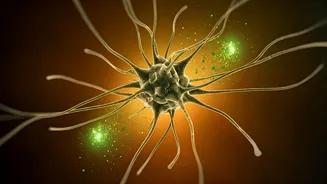
To rigorously assess the effectiveness of Divya Neurogrit Gold, researchers utilized Caenorhabditis elegans (C. elegans), a microscopic nematode, as their primary model organism. These organisms are exceptionally well-suited for neurobiological research due to their short 21-day life cycle, precisely mapped nervous system of 301 neurons (including eight dopamine-secreting neurons), and ease of individual counting. Through controlled experiments involving mutagenesis and the induction of neurotoxicity using 6-OHDA (a substance that eliminates nearly 50% of brain neurons), the researchers observed significant outcomes. Following administration of Divya Neurogrit, the organisms exhibited enhanced neuronal survival and repair, evidenced by a potential rebirth of neurological populations. Furthermore, studies demonstrated a notable increase in lifespan, extending from the typical 21 days to 23 days, suggesting a protective effect against neurodegenerative processes and an improvement in overall organismal health and resilience.
Behavioral and Functional Improvements
Further investigations into the efficacy of Divya Neurogrit Gold focused on observable behavioral and functional changes in C. elegans models. In a controlled Petri dish setup, where organisms were presented with attractants and repellents, a clear distinction was observed. Neurotoxic conditions typically caused organisms to gravitate towards repellents, deviating from their natural preference for attractants. However, upon administration of Divya Neurogrit, these organisms reverted to their intrinsic behavior, demonstrating a renewed ability to seek beneficial stimuli. Pre-treatment assessments established baseline activities, such as head-shaking frequency and movement smoothness. Subsequent exposure to neurotoxins revealed a decline in these parameters. The administration of Divya Neurogrit not only reversed these negative effects but also showed positive physiological shifts, reinforcing its potential to restore normal motor functions and overall well-being.
Comparative Analysis with L-DOPA
In a critical comparative study, the effectiveness of Divya Neurogrit was directly contrasted with L-DOPA, a standard allopathic medication for Parkinson's disease. This research involved introducing alpha-synuclein, the protein implicated as a primary cause of Parkinson's, to the C. elegans model. Organisms were then treated with either Divya Neurogrit or L-DOPA. The results indicated that Divya Neurogrit demonstrated superior therapeutic effects, showing greater effectiveness in mitigating the detrimental impact of alpha-synuclein aggregation. Another study examined the impact on feeding capacity, which was observed to be impaired in certain conditions. Again, when compared against L-DOPA, Divya Neurogrit exhibited more favorable outcomes, suggesting a broader spectrum of action and enhanced support for cellular functions essential for overall health. These findings underscore the promising potential of this Ayurvedic formulation.
Gene Regulation and Oxidative Stress
The research extended to examining the impact of Divya Neurogrit on cellular mechanisms, particularly concerning oxidative stress and gene expression. When C. elegans were subjected to sodium arsenite, a substance known to induce oxidative stress and subsequently lead to neuronal cell death, the detrimental effects were evident. However, following the administration of Divya Neurogrit, significant improvements were observed. The formula demonstrated a remarkable ability to effectively regulate key genes involved in cellular defense and repair, specifically PINK-1, PDR-1, and CAT-1. This regulation suggests that Divya Neurogrit can bolster the cell's intrinsic mechanisms for combating oxidative damage and promoting the survival of neurons. By influencing gene expression, the Ayurvedic formulation potentially offers a protective shield against the damaging processes that contribute to neurodegenerative diseases.