





Honoring Homeopathy's Founder
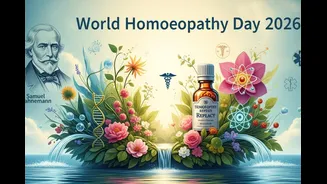
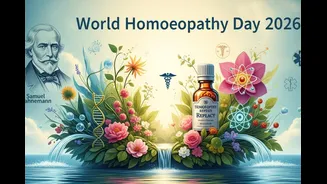
World Homeopathy Day, celebrated each year on April 10th, serves as a dedicated occasion to commemorate the birth anniversary of Dr. Christian Friedrich
Hahnemann. Dr. Hahnemann, a German physician, is widely recognized as the originator of homeopathy. His contributions laid the groundwork for a distinct system of medicine that has evolved over two centuries. This day offers a platform to reflect on his pioneering work and the impact it has had on alternative healing practices worldwide. By acknowledging his birthdate, practitioners and enthusiasts alike pay tribute to the visionary who introduced this unique approach to healthcare, focusing on individualized treatment and natural remedies.
Ancient Roots, Modern Practice
The principles underpinning homeopathy trace their lineage back to ancient times, with origins believed to date as far back as the 5th century BC. The very term 'homeopathy' is derived from two Greek words: 'homoi,' signifying 'similar,' and 'pathos,' meaning 'suffering' or 'disease.' While its conceptual roots are ancient, homeopathy as a structured system gained significant traction and popularity during the 19th century. This era saw the formalization of its principles and widespread adoption. The 200-year-old alternative medicine system operates on a fundamental tenet known as 'like cures like.' This principle suggests that a substance which can produce symptoms in a healthy person can, in a highly diluted form, be used to treat similar symptoms in a sick individual. This unique approach differentiates it from conventional medicine and emphasizes the body's own healing capabilities.
Global Themes and Recognition
Each year, World Homeopathy Day highlights specific themes to underscore its relevance and ongoing development. For instance, the theme 'Homeopathy for Sustainable Health' emphasizes the system's potential contribution to long-term well-being and ecological balance. Furthermore, international events, such as a conference held in London, have adopted themes like 'Harmony through Homoeopathy: Healing Beyond Borders,' showcasing homeopathy's global reach and its role in fostering health and wellness across diverse communities. These themes reflect a forward-looking perspective, positioning homeopathy not just as a historical practice, but as a vital component of a holistic approach to health that can transcend geographical and cultural boundaries, promoting well-being on a global scale.