






Ramsay's Culinary Surprise
Renowned chef Gordon Ramsay recently found himself at the center of a culinary conversation, not for his Michelin stars, but for a rather surprising food
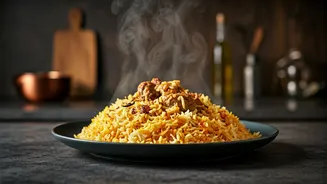
preference. During an interview, when asked to name his most cherished British dish, Ramsay pointed to biryani, a revelation that quickly set the internet abuzz. This statement, coming from a figure of his stature, prompted a cascade of reactions from food lovers, particularly those within the desi community, who found the classification of biryani as 'British' to be quite amusing and thought-provoking. The chef elaborated on his early exposure to the dish, crediting his childhood neighbor from Rajasthan for introducing him to the flavors that would leave a lasting impression. He also shared his journey to understand and perfect butter chicken, even collaborating with an Indian chef on a massive goat biryani for an event, highlighting his deep engagement with Indian culinary traditions.
Online Stir and Jests
The internet, ever the quick-witted commentator, wasted no time in responding to Gordon Ramsay's declaration. Online foodies and cultural enthusiasts playfully trolled the celebrity chef, with many joking about an 'Indian invasion' of traditional British cuisine. Comments ranged from lighthearted banter about Ramsay's taste to more pointed observations about the historical layers of culinary influence. Some users humorously suggested that the next thing to be claimed as British might be something entirely unrelated, while others pointed out the irony of a non-native dish being crowned a national favorite. This wave of witty remarks underscored a shared understanding and pride in the origins of these beloved dishes, turning a simple interview comment into a lively digital discourse.
Defining British Food
Ramsay's comments have inadvertently reignited a broader discussion about what truly constitutes 'British food' in the modern era. For many, the idea of a singular, pure British cuisine is becoming increasingly complex, shaped by centuries of immigration and cultural exchange. Dishes like biryani and butter chicken, while deeply popular and integrated into the UK's food landscape, are undeniably rooted in South Asian culinary heritage. This has led to interesting debates about how we define national dishes in a multicultural society, and whether popularity and widespread adoption equate to indigenous origin. The conversation highlights the fluid nature of food culture, where traditional boundaries are constantly being redefined by global influences and evolving palates.