
Introduction to Chutney
Chutneys, originating from the Indian subcontinent, are diverse condiments known for their ability to enhance the flavor profiles of meals. These creations
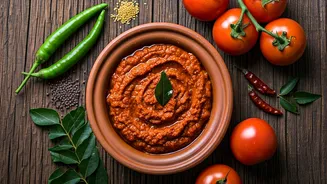
are typically crafted with fruits, vegetables, or herbs, and a mixture of spices, creating both sweet and savory elements. Kerala-style tomato chutney, in particular, distinguishes itself through its specific ingredient selection and cooking techniques. It showcases the distinctive flavors found in Kerala's cuisine. This vibrant side dish, which is a key component in Kerala cuisine, often offers a tangy and aromatic experience that elevates the overall taste of various dishes. Tomatoes serve as the base, harmoniously blended with spices, offering a taste experience that is both complex and incredibly satisfying. Beyond its inherent deliciousness, it also brings a cultural connection, weaving a narrative that links everyday meals to Kerala’s rich culinary history.
Key Chutney Ingredients
Creating Kerala-style tomato chutney starts with essential ingredients, each contributing to its unique character. Ripe, red tomatoes form the foundation, offering sweetness and natural acidity. Shallots, as an alternative to onions, contribute a milder oniony flavour and slight sweetness, which blend seamlessly with the tomatoes. Garlic and ginger, finely minced, deliver pungent, aromatic notes which enhance the flavour's complexity. Green chilies are added for a spicy kick, while a tempering with mustard seeds, curry leaves, and dried red chilies infuses a flavour depth to the chutney, and provides a signature aroma. Spices like turmeric powder and asafoetida introduce more flavours. Asafoetida is especially critical, since it provides a distinctive savoury foundation. Sugar or jaggery offers sweetness to balance the tang of tomatoes, and tamarind pulp might also be introduced to deepen the sourness, if desired. The careful selection of these ingredients is key, and each element plays a vital role in creating the perfect flavor balance.
Step-by-Step Preparation
The preparation of Kerala-style tomato chutney consists of several straightforward steps. Begin by preparing the tomatoes, shallots, garlic, ginger, and green chilies. The next step is tempering the mustard seeds, curry leaves, and dried red chilies in hot oil. Once these ingredients sizzle, add the shallots, garlic, and ginger, sautéing them until fragrant. Add tomatoes, green chilies, turmeric powder, asafoetida, and salt to this mixture. Cook until tomatoes soften and slightly break down. Stir in sugar or jaggery and tamarind pulp (if using) and bring it all to a boil. Allow the chutney to simmer, allowing flavors to meld and the consistency to thicken. Taste and adjust spices, adding more salt, sugar, or tamarind based on preference. Finally, let the chutney cool, allowing the flavors to settle before serving. The methodical preparation ensures that each element contributes perfectly to the final product, resulting in a perfectly balanced flavor.
Serving Suggestions & Tips
Kerala-style tomato chutney is a versatile accompaniment, ideally paired with a variety of dishes. It complements idlis, dosas, and appams, enhancing the traditional breakfast experience. It can also be served with rice and curries, adding a touch of tang and spice. Experiment by combining it with parathas and other flatbreads, providing a distinctive flavor to everyday meals. To achieve the best results, use ripe, juicy tomatoes for a sweeter taste, and finely chop the vegetables to ensure even cooking and flavor distribution. Adjust the amount of chilies and tamarind according to your personal taste, ensuring a personalized balance between tanginess and spiciness. Allowing the chutney to cool before serving enhances the taste, as the flavors meld together over time. Properly storing the chutney in an airtight container in the refrigerator will extend its shelf life, allowing you to enjoy the flavour for several days.
Variations and Enhancements
While the core recipe remains consistent, the Kerala-style tomato chutney can be modified to suit different tastes and preferences. Adding a small amount of roasted cumin seeds boosts the flavor profile with a smoky undertone. For an added layer of richness and texture, include a teaspoon of urad dal in the tempering process. Some people love incorporating a handful of fresh coriander leaves at the end, providing a burst of freshness and a beautiful visual appeal. The sweetness can be customized by using either sugar or jaggery; jaggery brings a deeper, molasses-like flavor. To make the chutney milder, remove the seeds from the green chilies or reduce their amount. These modifications highlight the recipe's adaptability, enabling a variety of tastes and customizing the flavor in line with the user's personal tastes. The ability to vary the recipe ensures that the chutney remains exciting and relevant, adaptable to any meal.