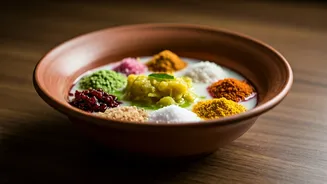







A Taste of Renewal
As spring ushers in Ugadi on March 19, 2026, a significant occasion for Andhra Pradesh, Telangana, and Karnataka, the traditional Ugadi Pachadi takes center
stage. This cherished dish, prepared for the Telugu and Kannada New Year, embodies the spirit of renewal and the cyclical nature of existence, drawing from ancient Hindu beliefs about creation. More than just a culinary item, Ugadi Pachadi serves as a mindful practice, encouraging reflection on life's spectrum of feelings and setting a positive outlook for the Vishwavasu Samvatsara. Its preparation is often a communal activity, weaving together stories and laughter, making it a deeply meaningful ritual that fosters resilience and gratitude for the year ahead. This flavorful concoction is a philosophical preamble to the festive celebrations, preparing both the palate and the spirit.
The Symphony of Flavors
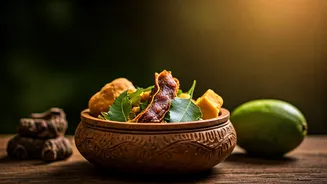
The magic of Ugadi Pachadi lies in its masterful amalgamation of six distinct tastes: sweet, sour, salty, bitter, spicy, and astringent. Each flavor is intentionally chosen to represent a fundamental human emotion or experience. Sweetness, derived from jaggery, signifies happiness and joy. The tartness of tamarind embodies life's unexpected turns and surprises. Bitterness, courtesy of neem flowers, reflects moments of sadness or melancholy. The sharp heat of black pepper symbolizes anger or irritation, while saltiness represents fear or apprehension. Finally, the astringency of raw mango evokes feelings of disgust or the challenges one might encounter. This intricate balance, guided by Ayurvedic principles known as Shadruchulu, offers a profound lesson in accepting all aspects of life, acknowledging that a truly fulfilling existence is found in harmony amidst this very diversity.
Crafting the Authentic Pachadi
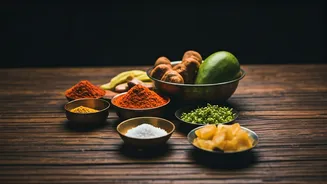
To create the authentic Ugadi Pachadi, several key ingredients are essential. You will need approximately one small ball of tamarind, which should be soaked to extract its pulp, and three tablespoons of grated jaggery, preferably a dark, organic variety for its rich sweetness. For astringency, half a cup of finely chopped raw green mango with its skin intact is crucial. The distinctive bitter notes come from one tablespoon of fresh or dried neem flowers, thoroughly rinsed. For the spicy kick, half a teaspoon of freshly ground black pepper powder is used, and a quarter teaspoon of rock salt (sendha namak) introduces a subtle salty taste. About one and a half cups of filtered water are needed for soaking and mixing. Optionally, one tablespoon of roasted Bengal gram dal can be added for textural contrast without altering the dish's symbolic integrity.
Step-by-Step Preparation
Preparing Ugadi Pachadi Andhra-style is a straightforward process designed to ensure each flavor profile is distinct yet harmonious. Begin by soaking the tamarind in half a cup of warm water for about 15-20 minutes until soft. Mash and strain it to obtain a quarter cup of thick pulp. Separately, dissolve three tablespoons of grated jaggery in one cup of warm water, filtering the syrup to remove any impurities. In a large mixing bowl, thoroughly combine the tamarind pulp and jaggery syrup, stirring vigorously for two minutes. Next, incorporate half a cup of finely chopped raw mango, a tablespoon of neem flowers, half a teaspoon of black pepper powder, and a quarter teaspoon of rock salt. Gently mix these ingredients for 3-5 minutes with a wooden spoon, being careful not to crush the delicate neem flowers. Taste and adjust the balance by adding a touch more jaggery for sweetness or pepper for spice if desired. Cover the mixture and refrigerate for 30-60 minutes to allow the flavors to meld beautifully. This recipe yields approximately two cups, perfect for family rituals.
Serving and Significance
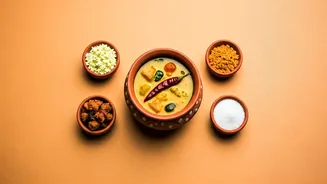
Ugadi Pachadi is traditionally served chilled in small bowls as the very first dish after the 'Panchanga Shravanam' (listening to the almanac). It's often garnished with a few extra neem flowers for visual appeal, adding to its aesthetic charm. To enhance the communal experience, this dish is presented alongside other festive staples like Pulihora and mango rice. Guests are encouraged to partake in the interactive aspect of guessing the emotions each distinct taste evokes, fostering conversation and shared appreciation for the dish's deeper meaning. By mastering the Ugadi Pachadi recipe and preparing it on March 19, 2026, one not only partakes in a delicious culinary tradition but also embraces a philosophy of balanced, resilient living, ready to face the year with equanimity and gratitude for all its experiences.