






Nellai's Sweet Identity
Tirunelveli, a city in Tamil Nadu known for its spiritual sites like the Nellaiappar Temple and its lifeblood, the Thamirabarani river, is celebrated not
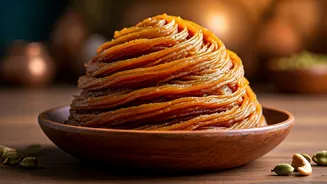
just for its heritage but for a singular culinary delight: its exceptional halwa. This rich, glossy confection has carved out a special niche for itself on India's gastronomic landscape. For generations, the city's name has been intrinsically linked with this delicious treat, a testament to its enduring appeal. The creation of this iconic sweet is a tale woven with threads of tradition, patience, and an unexpected link to culinary practices far to the north, transforming a simple recipe into a significant cultural emblem.
The Secret to Uniqueness
The distinctiveness of Tirunelveli's halwa stems from its long-standing tradition of preparing a wheat-based confection that boasts a unique flavour and texture. The simplicity of its ingredients—primarily wheat, sugar, and a generous amount of ghee—belies the extraordinary outcome. Many locals attribute the enhanced flavour and perfect consistency to the mineral-rich waters of the Thamirabarani river. The slow cooking process, carried out in large copper vessels, allows the mixture to gradually thicken, resulting in its signature glossy sheen and soft, yielding texture, a quality that has remained consistent over many decades and is a key part of its cherished identity.
The Legacy of Iruttu Kadai
The widespread fame of Tirunelveli halwa is inextricably bound to a modest establishment known as Iruttu Kadai Halwa Shop. This renowned outlet is recognized for its characteristic dim lighting and limited operating hours, which have become integral to its charm. Founded in the early twentieth century, the shop built its formidable reputation through unwavering consistency in quality rather than through rapid expansion. The shop's name, translating to 'dark shop,' originates from its minimal illumination, a feature that has evolved into a distinctive part of its identity. Despite its unpretentious setting, the shop consistently attracts a steady stream of eager customers, many of whom patiently await their freshly prepared servings of the beloved halwa.
Northern Roots, Southern Bloom
The genesis of this celebrated halwa can be traced back to the early 1800s, when the Zamindar of Chokkampatti developed a particular fondness for halwa during a visit to North India. Intrigued by the sweet, he brought skilled culinary experts from the Rajputana region, which is now known as Rajasthan, to his palace to replicate the recipe. Over successive generations, these culinary families made Tirunelveli their home, continuing the art of halwa making independently. Prominent figures like Jegan Singh and Bijli Singh are often associated with this transition, marking the evolution of the sweet from royal kitchens to the local marketplace, creating a fascinating culinary bridge.
Evolution and Local Adaptation
As time progressed, the original recipe underwent subtle adaptations to suit local conditions while diligently preserving its fundamental preparation techniques. The integration of regional water sources, specific cooking methods, and locally available ingredients contributed significantly to the halwa's unique character. What began as a luxury reserved for royalty gradually transformed into a cherished local specialty, eventually evolving into a powerful symbol of Tirunelveli's distinct identity. The ongoing involvement of families with ancestral ties to northern India adds a rich layer to the narrative, forging an uncommon and delightful culinary connection across vast distances.