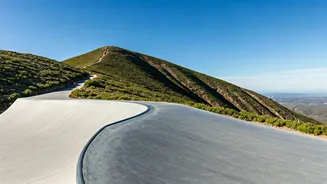

Terrain's Impact: Hiking
Hiking, often underestimated as an endurance builder, confronts the lower body with consistent challenges, particularly when tackling varied terrains.
Uphill sections demand significant quadriceps and calf muscle engagement for propulsion, while downhill stretches require careful control to prevent falls. The uneven surfaces – rocks, roots, and inclines – force the body to continuously adjust, engaging stabilizing muscles to maintain balance. The sustained effort, coupled with the variability of the terrain, creates a perfect environment for building endurance. These conditions ensure the lower body works constantly to manage the ever-changing demands of the trail. The constant adjustments and adaptation requirements make hiking a superior activity when it comes to boosting the lower body's capacity for sustained physical exertion. This translates to increased stamina and a lower rate of fatigue over time when performing lower body exercises and activities.
Uphill Challenges: Hiking Specifics
The uphill struggle in hiking is a prime example of its endurance-building capabilities. When ascending a slope, the body's primary focus shifts to overpowering gravity, which necessitates intense muscular effort. The quadriceps in the thighs and the calf muscles in the lower legs bear the brunt of this work, contracting repeatedly with each step to propel the body upward. This continuous strain forces these muscles to adapt and build endurance to manage prolonged exertion. Moreover, hiking at altitude introduces an extra layer of challenge. The decreased oxygen levels demand more from the cardiovascular system, which, in turn, amplifies the endurance component. With each upward step, not only are muscles working harder, but the body must efficiently utilize available oxygen to sustain the required effort. This synergy enhances overall endurance, setting hiking apart as a strenuous yet rewarding exercise for lower body development.
Balance Demands: Skateboarding Skills
Skateboarding places unique demands on balance, which indirectly translates into endurance training. Maintaining balance on a skateboard requires a constant interplay between the muscles in the lower body and the core. The body must make countless subtle adjustments to counter the shifting center of gravity caused by movement and the terrain. These micro-adjustments engage muscles continuously to maintain a stable stance and prevent falls. This constant engagement of muscles, even if it feels less physically taxing than hiking, does build endurance over time. Moreover, the dynamic nature of skateboarding, with its need to adapt to changing surfaces and perform tricks, ensures that the muscles are consistently challenged. The balance component combined with the necessity of controlled movements over time ensures that the lower body develops enhanced endurance capabilities, essential for extended skating sessions and the execution of tricks.
Hiking's Endurance Advantage
In direct comparison, hiking often takes the lead when considering lower body endurance. The consistent and variable terrain of hiking presents a more complete endurance challenge compared to the more intermittent efforts of skateboarding. While skateboarding builds balance and agility through continuous muscle engagement, hiking provides a sustained and strenuous workout that directly targets the lower body's capacity for exertion. Uphill hiking, in particular, forces muscles to work harder for longer periods. The varying inclines and declines create a more significant cardiovascular demand. Although skateboarding can be physically demanding, it generally doesn't create the same level of sustained physiological stress. Hiking, therefore, provides a clearer path to improved lower body endurance due to its continuous, high-impact nature. It builds a more robust endurance base by promoting constant adaptation and strengthening the muscles that drive movement on uneven surfaces.
Skateboarding's Training Benefits
Skateboarding, although not directly matching hiking for raw endurance, offers its own set of training advantages. The nature of skateboarding fosters agility, balance, and quick reactions. It involves a lot of short bursts of intense activity, punctuated by periods of rest, that help build both strength and endurance. The constant balancing and corrective movements engage muscles that stabilize the body and improve overall coordination. Furthermore, skateboarding's dynamic nature helps in enhancing the lower body's ability to recover quickly from bursts of activity. When performing tricks or navigating difficult terrain, skaters need to be ready to act quickly. This dynamic nature means that the muscles must adapt to changing demands and recover rapidly. In this process, skateboarding cultivates a more adaptive and resilient lower body, preparing it for the unpredictable and sudden requirements that can arise during activity or general daily tasks.