


Snake Plant's Resilience
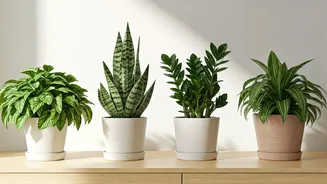
The snake plant, a paragon of hardiness, is renowned for its ability to endure less-than-ideal conditions, including dim lighting. Its leaves possess an innate
capacity to store water, rendering it exceptionally tolerant of dry spells. This makes it an ideal choice for novices to plant care, as it necessitates watering only once every two to three weeks. Beyond its low maintenance needs, the snake plant's distinctive upright foliage contributes a contemporary aesthetic to any interior, simultaneously enhancing air quality by filtering out common household toxins.
ZZ Plant's Ease
Another remarkably low-maintenance option for indoor greenery is the ZZ plant, which truly flourishes when given minimal attention. Its leaves are notably thick and coated with a waxy layer, enabling them to retain moisture with great efficiency. This characteristic allows the ZZ plant to comfortably go extended periods without needing a drink. It performs best in indirect light and can be watered approximately every two weeks. The plant's glossy, elegant foliage adds a touch of sophistication to any living or working space, enhancing its visual appeal without demanding constant care.
Aloe Vera's Charm
Renowned for its medicinal properties, the aloe vera plant is equally celebrated for its straightforward care requirements, classifying it as an easy-to-manage succulent. Its fleshy leaves are adept at storing water, which allows the plant to withstand prolonged dry conditions with ease. Aloe vera prefers bright, indirect sunlight and typically requires watering around every three weeks. Its unique, sculptural form makes it an aesthetically pleasing and valuable addition to any collection of indoor plants, blending beauty with practicality.
Jade Plant's Luck
Often referred to as the money tree, the jade plant is steeped in folklore, believed to usher in good fortune and financial prosperity. Beyond its symbolic appeal, it is exceptionally easy to look after. The jade plant’s succulent, oval-shaped leaves are excellent at hoarding water, contributing to its drought-resistant nature. It thrives most effectively under conditions of bright, indirect illumination and only requires watering when its soil feels completely dry, which usually occurs every two to three weeks, making it a dependable companion.
Spider Plant's Adaptability
Spider plants are celebrated for their remarkable flexibility and robustness, positioning them as prime choices for individuals keen on indoor gardening but seeking uncomplicated options. These plants adapt well to a wide spectrum of light conditions, ranging from low-light environments to areas bathed in bright, indirect sunlight. Once established, spider plants demand infrequent watering, roughly once a week, making them exceptionally suited for those who travel often or simply have a demanding schedule, ensuring their survival and continued growth with minimal intervention.