




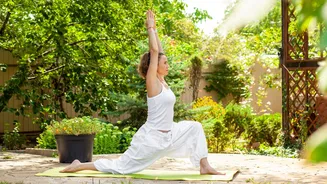
The Silent Threat of Hypertension
High blood pressure, or hypertension, has emerged as a significant global health concern, contributing to a rise in cardiovascular ailments such as heart
attacks and strokes. While pharmaceutical interventions play a vital role in managing this condition, integrating lifestyle modifications and wholesome practices is equally indispensable. Health recommendations worldwide frequently emphasize the importance of consistent physical activity. However, the demanding nature of modern life often makes daily adherence to strenuous exercise programs challenging. Fortunately, dedicating even a brief period, such as ten minutes, to a mindful exercise regimen can be more attainable than commuting to a fitness center, offering a practical alternative for busy individuals seeking to manage their health.
Introducing the Baduanjin Practice
A groundbreaking randomized clinical trial, detailed in the Journal of the American College of Cardiology (JACC), has provided compelling evidence that Baduanjin, a venerable Chinese mind-body discipline, can serve as an effective tool for blood pressure reduction. Remarkably, this practice requires no specialized equipment. Baduanjin is characterized by its deliberate, structured movements, underpinned by a strong emphasis on profound breathing techniques and meditative focus. The study crucially demonstrated that this ancient Chinese method is capable of lowering blood pressure with an efficacy comparable to that of brisk walking. Participants who engaged in Baduanjin observed reductions in their blood pressure after a three-month period, with these improvements remaining consistent for a full year, highlighting its potential for long-term health benefits.
The Science Behind the Success
The transformative potential of Baduanjin is further underscored by its simplicity, safety profile, and the inherent ease with which individuals can maintain long-term engagement. These attributes position it as a highly accessible and scalable lifestyle intervention for those aiming to lower their blood pressure. Baduanjin itself is a carefully organized sequence of eight distinct movements that synergistically blend aerobic conditioning, isometric holds, flexibility enhancement, and mind-body integration. With roots stretching back centuries, it is commonly practiced in communal settings throughout China. A typical routine lasts between 10 to 15 minutes, demanding minimal initial guidance and no exercise apparatus. Its low-to-moderate intensity makes it a safe and widely accessible option for a broad spectrum of adults.
Key Findings from the Clinical Trial
A pioneering large-scale, multicenter randomized trial, spearheaded by a team of Chinese researchers, meticulously investigated the impact of Baduanjin on blood pressure. The study involved 216 participants, all aged 40 years or older, dispersed across seven communities. The researchers tracked changes in 24-hour systolic blood pressure from the initial baseline measurements through to 12 and 52 weeks. The findings revealed that individuals practicing Baduanjin five days a week experienced a reduction in systolic blood pressure by approximately 3 mmHg, and another measure indicated a reduction of 5 mmHg. Importantly, Baduanjin demonstrated comparable results and a similar safety profile to brisk walking when assessed at the one-year mark. Notably, the observed health benefits persisted even without continuous supervision, addressing a significant hurdle for many lifestyle interventions that often struggle with long-term adherence outside structured programs.
Implementing Your Baduanjin Routine
To begin practicing Baduanjin, assume an upright stance with your feet positioned at shoulder-width apart, ensuring all movements are executed with controlled slowness. Crucially, synchronize each physical motion with your breath, inhaling and exhaling smoothly and deliberately as you transition between postures. Progress through the traditional eight distinct movements in their established order, concentrating on maintaining correct posture, achieving balance, and cultivating a sense of relaxation, rather than emphasizing speed or exertion. Aim to dedicate approximately 10 to 15 minutes daily to this practice in a tranquil environment, maintaining a calm and focused attention throughout the entire session. This mindful approach ensures that the benefits of the exercise are fully realized, contributing to both physical and mental well-being.