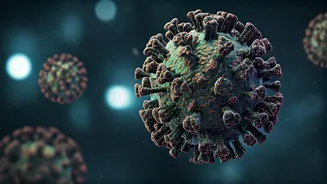








Understanding BA.3.2 "Cicada"
A new iteration of the COVID-19 virus, designated as BA.3.2 and colloquially named "Cicada," has begun to circulate. This particular subvariant has captured
attention due to a notable number of alterations within its spike protein, reportedly between 70 and 75, which is a considerably higher count than observed in the initial Omicron strain. While this extensive mutation profile might raise concerns, global health officials have indicated that the overall threat level remains manageable. The Cicada variant traces its lineage back to the BA.3 genetic family, a group last prominently identified in the early months of 2022. Initial observations have not revealed an increase in the severity of illness caused by this subvariant. However, scientists acknowledge that the substantial genetic changes could potentially impact the effectiveness of antibodies, whether acquired through prior infections or vaccination, in neutralizing the virus.
Vaccine Efficacy Remains Strong
Despite the genetic evolution of the virus, a crucial reassurance comes from medical experts: existing COVID-19 vaccines continue to offer robust defense against severe illness, hospitalization, and fatalities. The World Health Organization is actively monitoring the BA.3.2 subvariant, classifying it as a "Variant Under Monitoring." This designation signifies that the organization is keeping a close watch on its development and spread. Nevertheless, the WHO reiterates its strong recommendation for widespread vaccination, with a particular emphasis on ensuring that individuals who are at higher risk of severe outcomes are protected. This ongoing emphasis on vaccination underscores its role as a primary tool in mitigating the impact of the pandemic, even as new variants emerge.
Expert and WHO Guidance
Dr. Avi Kumar, a Senior Consultant in Pulmonology, notes that BA.3.2 typically presents with mild symptoms akin to common colds, including cough and fever, especially among younger individuals. He emphasizes that while current vaccines, including those updated for strains like JN.1 and LP.8.1, offer partial immunity, they remain highly effective in preventing severe disease. Dr. Kumar strongly advocates for booster doses to enhance immune protection, particularly for those in high-risk categories. Complementing this, the WHO's guidance centers on vaccination as the foremost strategy to avert hospitalizations and deaths. They also advise maintaining standard public health measures, such as wearing masks in crowded environments, and underscore the importance of early detection and continuous surveillance, especially in regions where the variant is newly appearing.
Protective Measures for All
Specific attention is being directed towards safeguarding vulnerable populations. Elderly individuals, those with pre-existing health conditions (comorbidities), and frequent travelers are strongly encouraged to stay up-to-date with their vaccination schedules, including booster shots. It is also advisable for these groups to seek personalized medical advice when necessary. Although the current risk level in India is considered low, maintaining a state of awareness and implementing proactive protective measures is highly recommended. The global spread of BA.3.2, first identified in South Africa in late 2024 and now present in at least 23 countries, including cases detected across 29 U.S. states via patient and wastewater monitoring, highlights the need for ongoing vigilance and coordinated surveillance efforts. While no indication of dominant global spread has emerged yet, the combination of vaccination, heightened awareness, and fundamental hygiene practices remains our most effective defense against this evolving variant.