



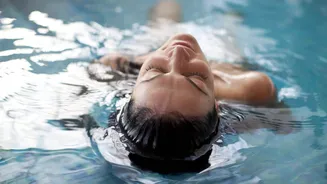
Warm Water Soaks
Embracing the soothing power of warm water is a fundamentally effective method for improving blood flow. When you immerse yourself in a bath heated to
a comfortable temperature, the warmth causes your blood vessels to expand, a process known as vasodilation. This expansion allows blood to travel more freely and efficiently throughout your entire system. A typical session lasting between 15 to 20 minutes not only aids circulation but also provides a wonderful opportunity to relax tense muscles and alleviate the day's accumulated stress, making it a dual-action wellness practice.
Dynamic Contrast Showers
Contrast showers offer a dynamic approach to stimulating circulation by ingeniously leveraging the body's response to temperature fluctuations. This technique involves the deliberate alternation between streams of hot and cold water, prompting rapid constriction and dilation of blood vessels. A common protocol suggests starting with a three-minute duration under warm water, followed by a one-minute burst of cold water. This cycle is repeated approximately three times, with the practice ideally concluding with the cold water to maximize invigorating effects. This method is highly effective in 'waking up' your circulatory system and promoting a vibrant sense of well-being.
Revitalizing Foot Baths
Focusing on the lower extremities, a warm foot bath presents a targeted yet deeply comforting way to enhance blood circulation specifically in your feet and legs. Submerging your feet in comfortably warm water can be further enhanced by adding soothing elements such as Epsom salts for their therapeutic properties or a few drops of your favorite essential oils for aroma and added benefits. Allowing your feet to soak for roughly 20 minutes allows for both deep relaxation and a significant improvement in blood flow to these crucial areas, which often bear the brunt of daily activity.
Targeted Cold Compresses
When localized inflammation or discomfort arises, applying cold compresses can serve as a potent tool for both reducing swelling and invigorating local circulation. The principle involves wrapping ice packs or cubes in a protective cloth and applying them to the affected area for about 15 minutes at a time. This cold application constricts blood vessels temporarily, which can then lead to improved blood flow and a faster recovery process once the compress is removed. It's particularly useful for easing muscle soreness and supporting post-exercise recovery, helping to alleviate discomfort and speed up healing.
Aquatic Aerobic Workouts
Engaging in water aerobics provides a robust, low-impact exercise regimen that significantly benefits cardiovascular health and boosts overall circulation without placing undue stress on your joints. Performing familiar aerobic movements like jogging in place or executing jumping jacks while submerged in water increases the resistance your body encounters. This amplified resistance means your muscles have to work harder, leading to a more effective workout and, consequently, a marked improvement in blood flow throughout the body over consistent practice. It's a gentle yet powerful way to keep your circulatory system in optimal condition.