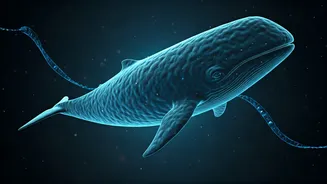







The Ocean's Immortals
For ages, humanity has pursued the dream of a longer life, exploring ancient remedies and modern science alike. Recently, the focus has shifted to the vast
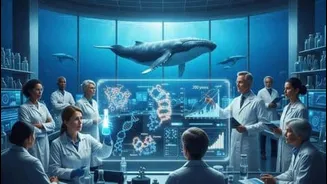
ocean and its most impressive inhabitants: whales. These magnificent creatures exhibit extraordinary lifespans, with some species, like the bowhead whale, living for over two centuries. Furthermore, they display a remarkable resistance to diseases, including cancer, which is a stark contrast to their immense size and longevity. This phenomenon, known as Peto's paradox, puzzles scientists who typically expect larger, longer-lived animals to have higher cancer rates. The key to this resilience appears to lie within their genetic makeup, specifically in how certain proteins function. Researchers have identified specialized proteins in whales that are exceptionally adept at repairing damaged DNA and protecting cells, thereby preserving cellular integrity over extended periods and significantly slowing the aging process.
Whale Protein's Promise
The scientific community is particularly intrigued by specific proteins found abundantly and efficiently in whales. These proteins are crucial for enhancing the body's capacity to mend damaged DNA and for regulating inflammation, two vital processes for maintaining health over time. Scientists hypothesize that this superior cellular maintenance system is the primary driver behind whales' impressive longevity and robust health. Preliminary laboratory investigations suggest that introducing or replicating these whale-derived proteins within human cells could potentially bolster our own natural repair mechanisms. In theory, this could translate into a significant slowdown of the biological aging process, a reduced susceptibility to cancer, and an overall extension of a healthy, active lifespan. The findings represent a groundbreaking avenue in the quest for anti-aging therapies and disease prevention.
Reaching 200 Years?
While the notion of humans living for 200 years due to "whale protein" captures the imagination, the scientific reality is considerably more nuanced. Experts emphasize that lifespan is a multifaceted trait influenced by a complex interplay of genetics, metabolic functions, lifestyle choices, and environmental factors. However, the research into whale biology is undeniably invaluable, providing unprecedented insights into the molecular mechanisms of aging. By studying and understanding the protective strategies employed by whales, scientists are paving the way for novel therapeutic interventions. The ultimate goal is to develop treatments that can effectively repair DNA damage, decelerate cellular senescence, and mitigate the various ailments associated with aging. If researchers can successfully replicate the protective cellular processes observed in whales, it could usher in a new era of human health and longevity, though living to precisely 200 years remains a theoretical prospect.