







Hiking's Core Challenge
Embarking on a hike is more than just a stroll through nature; it's a dynamic exercise that significantly engages your core. As you traverse varied landscapes,
from uphill climbs to downhill descents, your abdominal and back muscles work tirelessly to maintain your balance and stability. Each step on uneven terrain demands constant micro-adjustments, forcing your core to stabilize your body and prevent falls. This continuous, functional recruitment is a hallmark of hiking's effectiveness in building a resilient core. Furthermore, when you add the element of carrying a backpack, even a light one, the load is distributed through your torso, placing an additional, sustained demand on your core musculature to counteract the weight and maintain an upright posture. This makes hiking a comprehensive exercise that strengthens not just your legs, but also your entire midsection, fostering functional strength essential for everyday life.
Inline Skating's Core Engagement
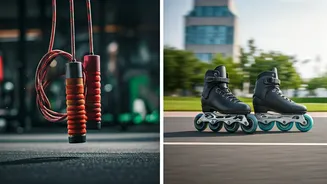
Inline skating presents a unique and engaging challenge for your core muscles. The very act of gliding across surfaces and maintaining forward momentum requires a stable and controlled body, primarily driven by your abdominal and oblique muscles. These muscles are crucial for keeping your torso upright and preventing excessive swaying. Beyond just forward motion, the dynamic movements involved in inline skating, such as turning, stopping, and navigating obstacles, demand rapid and precise core engagement. The lateral movements and changes in direction particularly tax the obliques, contributing to a well-rounded core workout. This activity fosters not only strength but also excellent balance and coordination, skills that are transferable to many other physical pursuits and daily activities.
Calorie Burn Comparison
Both hiking and inline skating are excellent avenues for expending calories and contributing to weight management. Generally, inline skating tends to burn more calories within a given timeframe due to its inherently more intense nature and the continuous engagement of large muscle groups. The fluid, gliding motion requires significant energy output. However, the calorie expenditure during hiking can vary considerably based on several factors. The difficulty of the terrain plays a crucial role; a steep, rugged trail will burn more calories than a flat, well-maintained path. Additionally, the weight of any gear you carry, such as a backpack filled with water and snacks, will increase the energy demand. Consistent participation in either activity is key to achieving and maintaining a healthy body weight.
Making Your Choice
Ultimately, the decision between hiking and inline skating for core enhancement hinges on your personal preferences, what's easily accessible to you, and your specific fitness aspirations. If your heart yearns for immersion in the natural world, with its ever-changing vistas and the tactile experience of varied ground underfoot, hiking might be the more compelling option. It offers a mental escape alongside a physical challenge. Conversely, if you thrive on fast-paced movement, the thrill of speed, and the constant refinement of your balance, inline skating could be the perfect fit. It provides an exhilarating sense of freedom and a direct challenge to your agility. Both activities are highly beneficial for overall physical well-being, offering distinct advantages without forcing you to compromise on enjoyment or sustained motivation.