






Pollution's Grim Toll
A comprehensive study spanning 20 dengue-endemic nations, including India, has unearthed a concerning correlation: prolonged exposure to elevated levels
of fine particulate matter, known as PM2.5, appears to significantly elevate the risk of death from dengue fever. In 2024 alone, the world grappled with approximately 14 million dengue cases and over 11,000 fatalities globally. India, in particular, reported over 230,000 dengue cases in the same year and was ranked the 5th most polluted country worldwide according to the World Air Quality Report 2024. This research, a collaborative effort involving experts from Japan, Bangladesh, and the United Kingdom and led by Sakirul Khan from Oita University, Japan, investigated whether sustained exposure to air pollution contributes to higher dengue mortality. The findings indicate a clear pattern: regions with annual mean PM2.5 levels exceeding 35 μg/m³ experienced three to five times greater dengue fatality rates compared to areas where PM2.5 concentrations remained below 15 µg/m³.
Weakening the Body
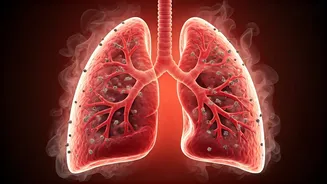
The pervasive presence of air pollution, especially PM2.5, has been increasingly implicated in intensifying the severity of dengue infections. The State of Global Air 2025 report estimates that air pollution contributed to nearly 8 million deaths globally in 2023, with 4.5 million of those linked to PM2.5 exposure. This microscopic particulate matter inflicts damage on the human body through various mechanisms. It is known to trigger widespread inflammation and compromise the integrity of the inner lining of blood vessels, a condition termed endothelial dysfunction. Such damage disrupts the normal functioning of the immune, cardiovascular, and respiratory systems. Crucially, dengue itself is characterized by damage to blood vessels, which can lead to plasma leakage and severe complications like shock. Scientists posit that chronic exposure to air pollution may predispose individuals to worse dengue outcomes by pre-emptively weakening their immune defenses and vascular health, even before they contract the virus.
Global Impact & Nuances
The connection between air pollution and dengue is not confined to a single geographical area. Research conducted in tropical locales such as Taiwan and Singapore has also highlighted a robust association between air pollution levels and the incidence of dengue cases. This suggests that pollution might not only affect human health but also influence the life cycles of the Aedes mosquitoes that transmit the virus, potentially altering virus activity and human susceptibility. While the global study, which included countries across Asia, Africa, and Latin America, meticulously attempted to control for several confounding variables such as rainfall patterns, ambient temperature, population density, and economic development indicators, some experts urge caution in interpreting the results directly. They point out that many of the included nations possess less robust healthcare infrastructures and exhibit inconsistent disease surveillance practices. The prevalence of underreported dengue cases in these regions can skew fatality rates, thereby complicating direct comparative analyses between different geographical areas.