






The Sitting/Standing Dilemma
For years, the alarming phrase "sitting is the new smoking" has circulated, suggesting that sedentary work habits are as damaging as smoking. While this
catchphrase highlights a genuine concern, it oversimplifies the issue. If prolonged sitting were the sole culprit, simply standing more would offer a complete solution. However, for many professionals, including healthcare workers, educators, retail staff, and service industry employees, standing for extended periods isn't a choice but a daily reality that also contributes to significant health problems. In Europe, musculoskeletal disorders (MSDs) are a leading cause of workplace ailments, affecting the back, neck, shoulders, legs, and feet. Statistics show that in 2024, physical overexertion contributed to 29% of work-related accidents causing sick leave, with MSDs accounting for a staggering 78% of all work-related illnesses. This reality prompts a critical question: is it truly better to stand or sit? The answer, as experts suggest, lies less in the static position and more in the duration and frequency of movement throughout the workday.
The Foundation's Strain
While back pain often dominates discussions about workplace discomfort, the issues often begin much lower down – with our feet. As the primary point of contact with the ground, feet bear the brunt of our body's weight, distributing pressure and transmitting forces upwards through the ankles, knees, hips, and spine. When feet are held in a static position for many hours, this constant pressure can lead to a cascade of problems affecting the entire body. Research, such as one study where participants stood for a full workday, revealed measurable shifts in posture and pressure distribution on the soles of their feet. This extended standing was also associated with notable discomfort in the lower back, knees, and feet themselves. It's crucial to recognize that individual foot biomechanics vary, and these differences can influence how our bodies react to sustained workplace demands, potentially contributing to the development of pain and discomfort.
Movement is the Antidote
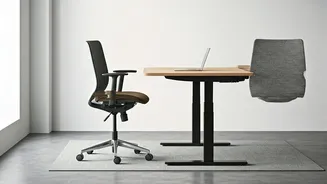
The European Agency for Safety and Health at Work (EU-OSHA) emphasizes a fundamental principle for workplace well-being: varying posture and incorporating regular movement are far more beneficial than remaining static for extended periods. This has spurred interest in innovative solutions like height-adjustable desks, specialized ergonomic chairs, supportive insoles, posture correctors, and lumbar cushions. While some of these tools might offer a degree of relief, they cannot fully compensate for a poorly designed workday that lacks fundamental movement. The most effective preventative measures are less glamorous but significantly more impactful. These include implementing short, frequent breaks, rotating tasks to change physical demands, adjusting workstations for optimal ergonomics, wearing appropriate footwear, engaging in regular physical exercise, and structuring the workday to encourage movement. Ultimately, the goal isn't to demonize sitting or glorify standing, but to acknowledge that the human body thrives on change and adaptation. Problems arise when our work routines force us into prolonged stillness, irrespective of whether we are seated or on our feet.