



Balancing on Surfaces
Incorporating balancing exercises on surfaces that are not perfectly flat is an excellent starting point for improving coordination. This involves actively
engaging multiple muscle groups and your cognitive abilities to maintain stability. The unpredictable nature of uneven surfaces, such as a grassy slope, a balance board, or even a stack of pillows, forces your visual and vestibular systems to work in sync. This results in a heightened awareness of your body's position in space. To begin, try standing on one foot on a slightly unstable surface, focusing on a fixed point ahead. Gradually increase the difficulty by adding movement, such as slowly shifting your weight or gently tossing a ball. Regular practice of these balancing activities not only enhances coordination but also strengthens core muscles and improves reaction time. Remember to start slowly and gradually increase the duration and difficulty as your balance improves. With consistent effort, you will observe significant improvements in your overall coordination, reaction speed and body control.
Stick Fighting Techniques
Stick fighting, often rooted in traditional martial arts, provides a dynamic and engaging method to enhance coordination. The practice requires precise hand-eye coordination and rapid decision-making. The movements in stick fighting demand that your eyes track the opponent's actions and the trajectory of the stick. This constant tracking sharpens your visual processing speed. Basic drills might involve parrying, blocking, and striking, requiring you to anticipate your opponent's actions. Advanced techniques include complex footwork patterns, quick transitions between offensive and defensive maneuvers, and varying attack angles. To improve coordination, begin with fundamental movements. Practicing these basics will teach your body the necessary motor skills. Then, gradually incorporate more complex combinations. This continual adaptation and learning directly translate to enhanced coordination skills. The dynamic nature of stick fighting, combined with the need for constant focus, makes it a potent tool for refining both physical and mental coordination.
Eye Coordination Exercises
Dedicated exercises can further enhance your eye coordination, targeting specific visual skills essential for improved focus and reaction time. A simple exercise is the 'pencil push-up'. Hold a pencil at arm's length and focus on its tip. Slowly bring the pencil closer to your nose, maintaining focus. Then, move it away. Repeat this several times. This exercise enhances your eyes' ability to converge (turn inwards) and diverge (turn outwards), critical for close-up and long-distance vision. Another useful exercise is the 'eye tracking'. Hold a pen or a finger at arm's length, and move it horizontally, vertically, and diagonally. Keep your eyes focused on the moving object. This trains the eye muscles to move smoothly and efficiently, improving your tracking abilities. Another useful exercise is known as 'saccades' or rapid eye movements. Focus on two objects placed at different distances, and rapidly switch your gaze between them. By performing these exercises regularly, you can strengthen the eye muscles and improve your visual processing capabilities, leading to better coordination in everyday activities.
Dance Movement for Eyes
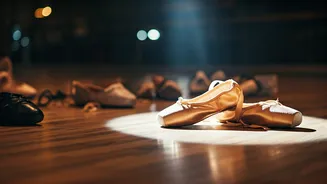
Dance, with its graceful movements and intricate steps, is an excellent vehicle for improving eye coordination. The rhythm and fluidity of dance demand that your eyes and body cooperate to execute complex patterns. Consider the use of a simple choreography. You must learn the sequence of steps and movements. Your eyes guide your body through the steps, helping you maintain balance and spatial awareness. Additionally, dance often involves following other dancers or focusing on a specific spot in the room, which sharpens visual tracking skills. Many dance styles require you to change your focus quickly, such as transitioning from looking at your feet to looking at your partner. To begin, choose a dance style that you enjoy and which feels comfortable. Start by learning basic steps. Gradually incorporate more complex sequences. Pay attention to how your eyes work with your body. Dance exercises are not only a fun way to improve coordination but also boost your overall fitness, enhance spatial awareness, and improve your cognitive function.
Drumming Patterns
Traditional drumming provides a unique approach to enhancing coordination, as it involves the synchronization of your hands, feet, and eyes with auditory cues. Practicing complex rhythms improves your motor skills and reaction time. To perform drumming effectively, you must follow visual cues, such as written music or instructional videos. This involves coordinating your eyes with your hands and feet to strike the drums accurately and in time with the music. The rhythmic patterns create a need for constant focus and concentration. Drumming enhances your ability to switch between different tasks and respond quickly to changing stimuli. Start by learning basic drum beats and rhythms. Gradually increase the complexity of the patterns. This builds your ability to process information efficiently and respond appropriately. Consider learning from a drumming instructor or online resources to gain a deeper understanding of rhythms and techniques. The act of drumming, with its combination of physical and mental challenges, is a holistic method for boosting coordination, improving musicality, and enhancing overall brain function.
Rope Skipping Games
Rope skipping games offer a playful and effective approach to improving eye-hand-foot coordination. The rhythmic jumping demands that your body responds to the rotating rope. Games that incorporate rope skipping require constant visual monitoring of the rope's trajectory. This sharpens your visual focus and anticipation skills. Various rope skipping games, such as double dutch or partner jumping, enhance coordination further by requiring you to interact with others and follow specific patterns. Consider starting with simple skipping routines, and gradually increase the difficulty by adding tricks or variations, such as jumping over the rope while crossing your arms. Rope skipping also challenges your balance and spatial awareness. You must continuously adjust your body position to maintain the proper rhythm and avoid tripping. Make rope skipping a regular part of your exercise routine. By incorporating these activities into your routine, you can enhance coordination, improve cardiovascular health, and make exercise enjoyable.