


The Fabric Choice
Achieving spectacular curls with the plopping technique hinges significantly on the material you choose to cradle your wet hair. Opting for a soft, absorbent
cotton T-shirt or a plush microfiber towel is paramount. These fabrics are designed to wick away excess moisture efficiently without stripping your hair of its natural hydration, which is crucial for maintaining the integrity of your curl pattern. Regular bath towels, on the other hand, can be quite abrasive, their rough texture potentially disrupting the delicate curls, leading to unwanted frizz and even breakage. By selecting the right fabric, you create an optimal environment for your curls to set and flourish, minimizing drying time and maximizing definition.
Mastering the Technique
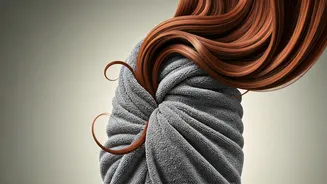
Once you've selected your ideal fabric, it's time to perfect the plopping application. Begin by applying your preferred styling products, such as a curl cream or gel, to your hair while it's still damp. This is a critical step that primes your curls for definition. Next, tilt your head forward, allowing your curls to cascade downwards. Carefully position your damp, product-laden curls into the center of your spread-out T-shirt or microfiber towel. The key is to gather all your hair within the fabric. Then, securely wrap the material around your head, akin to tying a turban, ensuring every strand is neatly tucked inside. This containment is what helps preserve your curl structure as your hair begins to dry, preventing them from expanding and losing their shape.
Timing for Definition
The duration your hair remains 'plopped' plays a vital role in the final outcome of your curl definition. Generally, leaving your hair wrapped for a period ranging from approximately 20 minutes to a full hour is recommended. The precise timing can be adjusted based on how saturated your hair is post-wash and the level of curl definition you desire. If your hair is quite wet, a longer plop time might be beneficial. However, be mindful that keeping your hair confined for an excessive duration can sometimes lead to limpness, diminishing the bounce you're aiming for. It's wise to periodically check on your hair’s dryness level and curl formation to strike the perfect balance, ensuring your curls are well-defined without being weighed down.
The Drying Process
After carefully unveiling your hair from the T-shirt or towel, the drying phase commences. For the gentlest approach, allow your curls to air-dry completely. This method respects the hair cuticle and helps maintain optimal frizz control. However, if time is a constraint, you can expedite the process using a diffuser attachment on your hairdryer. Ensure you use a low heat setting to prevent heat damage and frizz. A crucial tip during this entire drying stage is to refrain from touching your curls excessively. Constant manipulation can disrupt the developing curl pattern and encourage frizz. Once your hair is completely dry, you may gently use your fingers to separate any large curl clumps if you desire more volume, but do so sparingly to preserve the beautifully formed curl spirals.