



The Essence of Rongali Bihu
Rongali Bihu, also celebrated as Bohag Bihu, marks the advent of spring and the crucial sowing season, falling on April 15, 2026. This vibrant festival
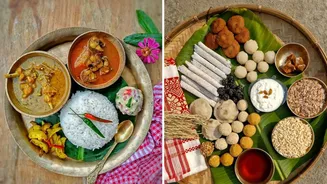
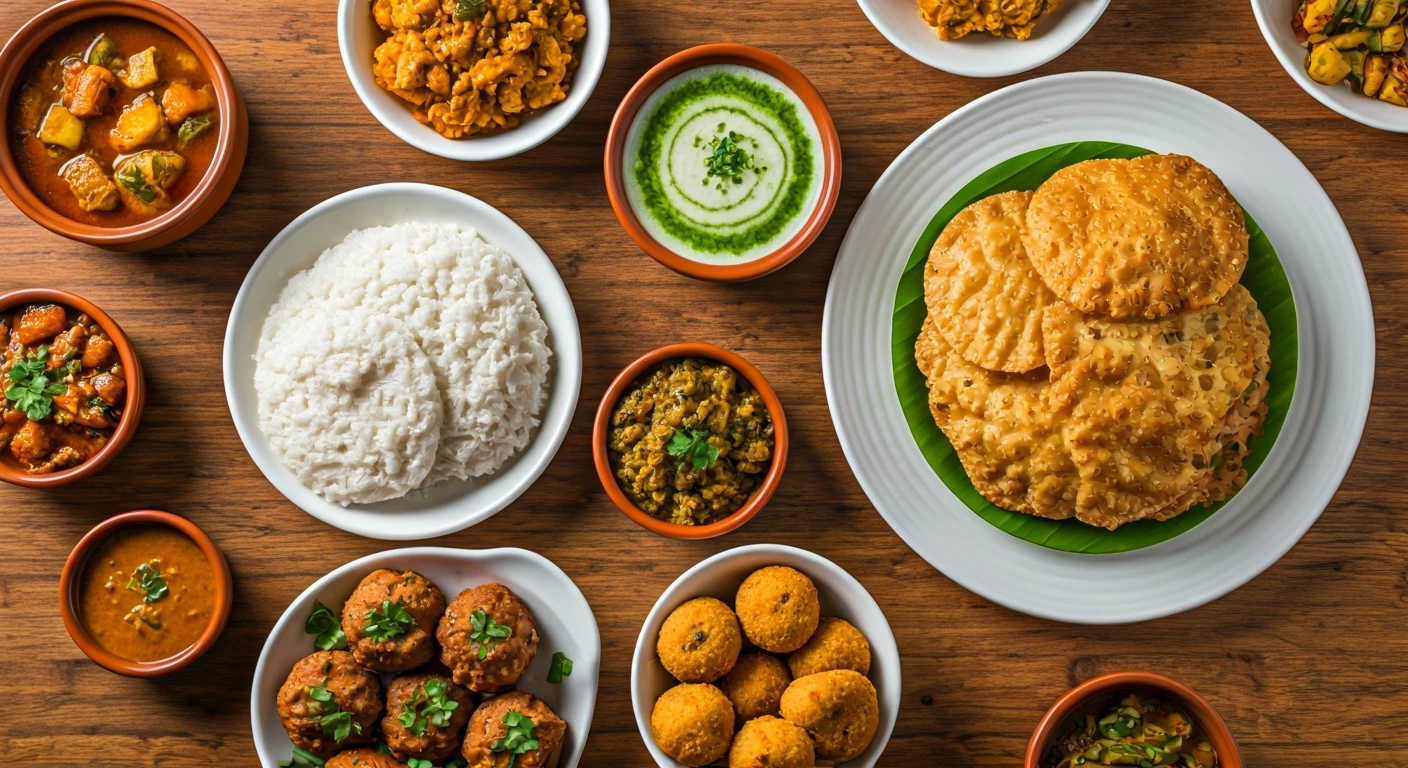
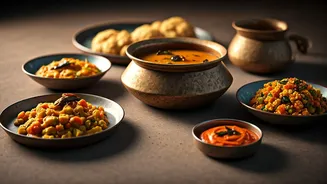
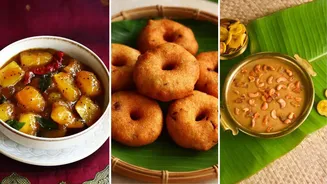
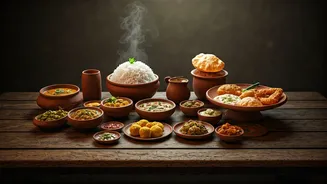
is not merely a date on the calendar but a week-long celebration filled with the soul-stirring sounds of traditional music, energetic folk dances, and communal gatherings that forge stronger bonds within Assamese communities. Central to these festivities is the revered Assamese lunch, presented as a meticulously prepared thali. This meal is a testament to the region's rich agricultural bounty, featuring seasonal produce and time-honored culinary techniques passed down through generations. The foundation of this feast is the fragrant Joha rice, complemented by a diverse array of distinctive preparations, ranging from palate-cleansing alkaline starters to zesty fish curries and deeply flavorful greens, all designed to harmonize taste and nourishment.
Signature Bihu Starters
The Assamese culinary landscape is distinguished by Khar, a quintessential starter that elegantly prepares the palate for the meal ahead. This unique preparation derives its distinct alkaline nature from filtered water, traditionally derived from the ashes of dried banana peels or specific vegetables. This initial course serves a vital function, gently cleansing the taste buds and setting a receptive stage for the diverse flavors that will follow. Its subtle yet distinctive character is a hallmark of Assamese hospitality, signaling the commencement of a truly authentic and culturally rich dining experience.
Aromatic Joha Rice
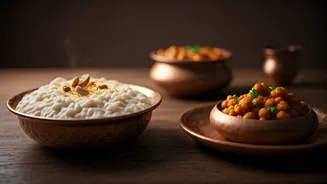
At the heart of any traditional Assamese thali, and especially the Rongali Bihu feast, lies Joha rice. This special variety is celebrated for its small, delicate grains and its exquisite, naturally fragrant aroma. When prepared, typically by light steaming, it achieves a perfect texture that complements every other dish on the platter. Its subtle perfume and slightly sticky consistency make it an ideal canvas for the varied flavors of Assamese cuisine, from the mildest vegetable preparations to the most robust meat curries. Joha rice is more than just a staple; it's an aromatic anchor that elevates the entire dining experience, embodying the essence of Assamese culinary pride.
Earthy Greens & Potatoes
The Bihu lunch showcases the region's connection to the land through dishes like Dhekia xaak and Aloo pitika. Dhekia xaak, featuring tender fiddlehead fern shoots harvested during the spring season, is prepared with minimal spices. This approach allows the natural, earthy flavors of the fern to shine through, celebrating the freshness of the spring harvest. Complementing the greens is Aloo pitika, a beloved comfort food. This dish involves boiling potatoes until tender, then hand-mashing them with sharp raw onion, pungent mustard oil, and fiery green chilies. The resulting simple yet intensely satisfying mash provides a grounding counterpoint to the lighter elements of the meal.
Tangy Fish & Rich Duck
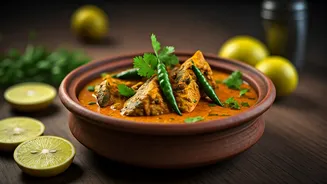
The savory courses of a Rongali Bihu thali often include Masor tenga, a delicately sour fish curry, and a hearty duck curry. Masor tenga is prepared using fresh river fish simmered in a light, tangy broth. The sourness is typically achieved by adding seasonal vegetables such as ripe tomatoes or a squeeze of lemon, creating a refreshing gravy that invigorates the palate. Equally cherished, especially for celebratory occasions, is the duck curry, often cooked with ash gourd. This combination imparts a unique richness and depth to the dish, making it a particularly relished and satisfying component of the festive spread, embodying the celebratory spirit of the New Year.
Balancing Flavors
The thoughtful composition of an Assamese thali ensures a harmonious balance of flavors and digestive benefits. This is exemplified by the inclusion of Tita kerela pitika, a preparation of lightly roasted bitter gourd. While bitter gourd might seem challenging, its inclusion offers a crucial contrast to the richer and sweeter elements of the meal. This slight bitterness acts as a palate cleanser and aids digestion, demonstrating the ancient wisdom embedded in Assamese cuisine. The deliberate inclusion of dishes with varying flavor profiles, from the tang of Masor tenga to the subtle bitterness of kerela, showcases a profound understanding of culinary balance and well-being.
Sweet Endings: Pitha & Laru
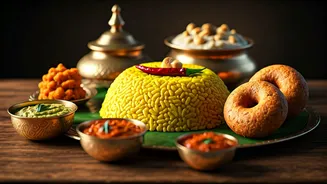
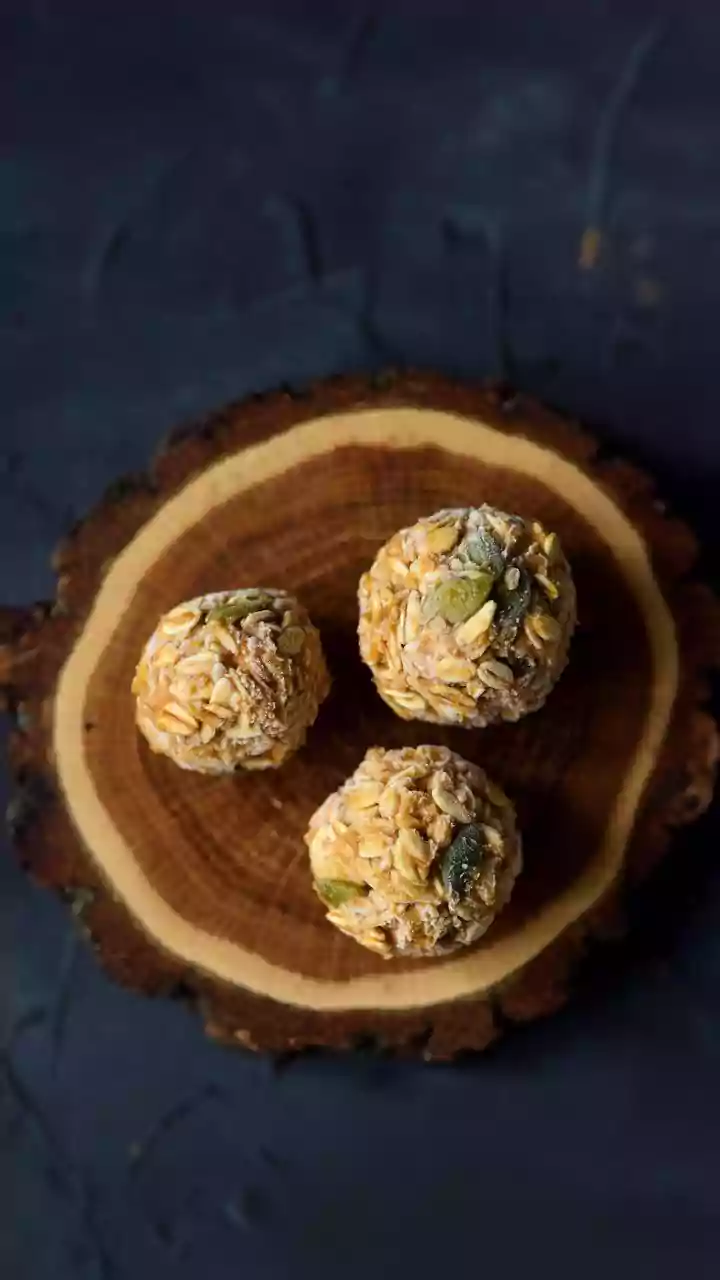
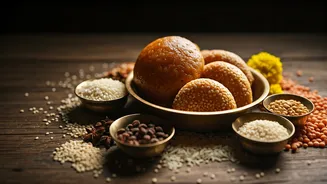
No Assamese feast, particularly one celebrating the New Year, is complete without a selection of traditional sweets, collectively known as Pitha and Laru. These handcrafted delights symbolize prosperity and the sweet joys of life. Among the popular varieties are rice cakes, often filled with a rich mixture of grated coconut and jaggery, offering a delightful interplay of textures and sweet, caramelized flavors. Alongside these are various types of Laru, small balls made from ingredients like roasted sesame seeds or desiccated coconut, bound together with jaggery. These sweet treats provide a perfect, joyous conclusion to the elaborate Rongali Bihu lunch, leaving diners with a sense of warmth and festivity.